
- Emile Durkheim - Philosophical Foundation
- Introduction
- Biographical Sketch of Emile Durkheim
- Socio-Historical Background
- Intellectual Influences on Durkheim's Works
- Central Ideas
- Emile Durkheim - Social Fact
- Introduction
- General Conditions for the Establishment of Social Science
- Sociology as Study of 'Social Facts'
- The Sociological Method
- Emile Durkheim - Forms of Social Solidarity
- Introduction
- Mechanical Solidarity
- Organic Solidarity
- Max Weber - Philosophical Foundation
- Biographical Sketch of Max Weber
- Socio-Historical Background
- Intellectual Influences
- Central Ideas
- Max Weber - Social Action and Ideal Types
- Social Action
- Ideal Types
- Purpose and Use of Ideal Types
- Ideal Types in Weber's Work
- Max Weber - Power and Authority
- Power
- Authority
- Types of Authority
- Bureaucracy
- Karl Marx
- Introduction
- The Early Years of Karl Marx
- Major Works of Karl Marx
- Theory of Alienation by Karl Marx
- Commodity Fetishism by Karl Marx
- Dialectical Materialism by Karl Marx
- Theory of Class Struggle by Karl Marx
- Historical Materialism by Karl Marx
- Stages of History by Karl Marx
- The Theory of Class War
- Theory of Surplus Value – Das Capital
- State and Revolution by Karl Marx
- Vision of a Communist Society
- Quotes by Karl Marx
Emile Durkheim - Philosophical Foundation
Introduction
Émile Durkheim was a French sociologist.
He maintained it was possible to develop a scientific study of society.
Both Auguste Comte and Émile Durkheim contributed to providing credibility to sociology.
They helped establish sociology as an independent academic discipline.
Durkheim is known for his writings on division of labour in society, religion, suicide, education, and morals.
This unit begins with a biographical outline of Durkheim to understand the social, economic, and political environment influencing his ideas.
It then examines the specific intellectual ideas that influenced him.
Finally, it covers some important ideas from his writings.
Biographical Sketch of Emile Durkheim
Émile Durkheim was born on 15th April 1858 in Epinal, a small town in Eastern France.
He grew up in a Jewish family; his father was a rabbi (spiritual leader and religious teacher).
As a child, he studied Hebrew and the Talmud and attended a rabbinical school with the initial aim to become a rabbi.
Later, Durkheim lost interest in religious education and joined a local school.
He was raised in a family emphasizing morality and discipline.
Durkheim eventually gave up Judaism and Christianity, believing these religions could not answer the problems of the modern world.
Despite this, he maintained interest in the intellectual investigation of religion and morality throughout his academic career.
For higher education, he joined the Ecole Normale Superieure in 1879, the most distinguished college in France.
Initially interested in psychology and philosophy, he was critical of the education style at the college, considering it too literary, rhetorical, and lacking scientific rigour.
In his third year, he decided to study sociology, which he saw as more rational, scientific, and practical for understanding philosophical questions.
At Ecole Normale, Durkheim was influenced by neo-Kantian scholars like Renouvier and Boutroux.
Boutroux influenced Durkheim’s view that each discipline should have a distinct subject matter.
Durkheim was influenced by Renouvier’s commitment to rationalism, scientific study of morality, and secular education.
The historian Fustel de Coulanges, who emphasized the scientific method and the importance of religion in social life, also influenced Durkheim.
From 1882 to 1887, Durkheim taught philosophy in state secondary schools near Paris.
During this time, he decided on his doctoral thesis topic: the relation between individualism and socialism.
He later focused on the relation between individual and society, finally settling on the relation between individual personality and social solidarity.
He completed the first draft of his dissertation in 1886, which was incorporated into his first book, The Division of Labour in Society.
Doctoral candidates in France write two theses: a smaller and a larger one.
Durkheim’s smaller thesis was on Montesquieu, a French political scientist and early proponent of a scientific, comparative approach to political institutions (the state).
Durkheim considered Montesquieu a forerunner of sociology.
His main thesis on division of labour in society connected the economic idea of division of labour (as per Adam Smith) to its social meaning.
Durkheim analyzed functions, causes, and abnormal forms of division of labour in society, beyond its economic aspects.
In 1895, Durkheim published The Rules of Sociological Method, defining social facts, and laying down rules for their observation, recognition of normal and pathological, and explanation.
His work on Suicide explored its social aspects, identifying three types of suicides, each with different causes.
Although Auguste Comte coined ‘sociology’ in 1838, the discipline struggled for academic recognition.
To understand sociology’s influence, Durkheim visited many German universities between 1885-86.
German social thinkers were influenced by Herbert Spencer’s organic analogy in studying societies.
Durkheim was impressed by the scientific study of morality by Wagner and Schmoller, and Wilhelm Wundt’s contribution to sociology of morality.
His articles on German social science and morality became popular.
In 1887, Durkheim began his career as a Professor at the University of Bordeaux, where he spent 15 productive years.
He published The Division of Labour in Society in 1893, The Rules of Sociological Method in 1895, and Suicide in 1897 while at Bordeaux.
In 1898, Durkheim founded one of the world’s first sociology journals, L’Année Sociologique.
Durkheim faced opposition for supporting sociology during his lifetime.
He disliked politics but responded to accusations against intellectuals supporting the Dreyfus case in his article ‘Individuals and Intellectuals’ on moral individualism.
The Dreyfus Affair involved the false court-martial of Alfred Dreyfus during WWI for allegedly selling secrets to Germany.
Durkheim’s public participation after the affair led to his appointment at Sorbonne University in 1902.
At Sorbonne, he taught Education and Sociology, became a full professor in 1906, and was named chair of Science of Education and Sociology in 1913.
Durkheim died of a heart attack in 1917, following the death of his son in WWI.
Socio-Historical Background
After the French Revolution (1789-1799) and the onset of the Enlightenment Age, there was growing intellectual concern about the rise of individualism in society.
There was an increase in the assertion of individual political rights and a decline in the collective authority of the state.
In 1871, France faced a political crisis and a decline in national unity.
France aimed for political consolidation by focusing on social progress.
It was believed that the development of the scientific method would lead to social progress.
Durkheim believed the sociological method could provide solutions to the decay in moral order.
He was interested in the recuperation of the republic through establishing a moral, civic, and secular order.
Durkheim focused on how individuals related to social life, especially in the context of increasing individualism in the modern industrial age.
Durkheim served as a Professor of Science of Education and Sociology during a time when the French government sought to secularize education.
The government aimed to create an education system not influenced by any religious faith.
Durkheim incorporated secular topics into education, encouraging schools to teach reverence for society.
He wanted students to respect institutions of society and understand social change from a secular perspective.
Recurring ideas in Durkheim’s writings include the importance of ‘ideals’ and moral unity in society.
He emphasized the significance of the individual as both an active agent and a passive recipient of social influences.
He highlighted the attachment of the individual to society.
Intellectual Influences on Durkheim's Works
Social Realism
Durkheim provided social explanations for all phenomena and was a social realist, viewing society as sui generis with existence prior to the individual.
He believed economic and utilitarian explanations could not explain individual phenomena.
Utilitarian philosophers argued individuals engage in economic exchange driven by self-interest; Durkheim rejected this view.
Durkheim opposed the utilitarian social theory of John Stuart Mill and Jeremy Bentham, who saw individuals as autonomous and unrestrained by social rules.
Contrary to them, Durkheim held that society precedes the individual, and society and individual are inseparable.
There is a social constraint on individuals, and their actions are not strictly utilitarian or economically driven.
Durkheim aimed to establish sociology as an independent discipline studying social facts that are constraining and external.
He believed human action is not based on common motives or self-interest but influenced by an external social constraint leading to certain actions.
This led to his writing of The Rules of Sociological Method.
Early French intellectual influences on Durkheim included J.J. Rousseau and Hobbes.
Rousseau influenced Durkheim’s thoughts on morality and society, emphasizing the need for common social and moral rules to keep society together.
Durkheim disagreed with Rousseau’s individualist theories that morality is explained by the original human nature of individuals.
Rousseau believed collective will emerges from many individual wills, while Durkheim analyzed morality in relation to society.
In his 1902-3 lectures on Moral Education at Sorbonne, Durkheim linked morality with discipline and group membership.
Durkheim disagreed with Hobbes, who saw individuals contracting out of nature and emphasized individual will preceding social restraint.
Hobbes explained society as emerging when individuals agree to common rules under a leader for peace.
Durkheim held that social constraint emerges from the collective, not from the individual; it is external.
Durkheim’s social realism opposed the individualism/nominalism of Herbert Spencer.
Spencer argued modern society is based on contracts and self-interested individual acts and social order arises from individual struggle.
Durkheim maintained society precedes individual action and social integration arises from shared solidarity, not individual actions.
In The Rules of Sociological Method, Durkheim developed a framework studying ‘social facts’ such as suicide rates, religious affiliations, and moral rules.
These social facts constrain individuals and represent the ultimate social reality—the group, not the individual.
Social facts cannot be reduced to or explained by psychological or physiological factors; they are external and irreducible to individual facts.
Durkheim analyzed mental and moral qualities of individuals as social, underlying concepts like collective conscience and social solidarity.
His works assume that mental and moral qualities are social, not individual.
Scientism and Influence of Positivism
Till the late nineteenth century, sociology was not studied as an academic discipline in French universities.
The term ‘sociology’ was founded by Auguste Comte in 1838, but sociology was not introduced in universities at that time.
Durkheim was influenced by Comte’s idea of positivism.
After joining Bordeaux as a professor in 1887, Durkheim instituted sociology as an academic discipline.
For Durkheim, sociology could be established as a scientific discipline only when causal relations underlying social activities were studied.
Positivist doctrine advocated that speculative sciences like philosophy or history should seek law-like generalities based on relationships between observed facts.
Emerging sociology aimed to establish generalizations rather than mere speculations.
Durkheim was influenced by intellectuals like Montesquieu, Saint Simon, and Comte in developing sociology as a scientific discipline.
Montesquieu believed a science of society should explore facts, not mere speculation, and held that humans could not exist without society.
Saint Simon contributed the idea of a science of society.
Comte developed a method and ranked sciences into positivistic and non-positivistic, placing social sciences lower in the hierarchy.
Sciences like mathematics and biology were considered more developed and positivistic, while social sciences like philosophy and history were non-positivistic.
Comte theorized societies pass through stages: theological, metaphysical, and scientific.
In the theological stage, causes are explained as the will of Gods.
In the metaphysical stage, causes are explained by speculative truths.
In the scientific stage, causes are explained through observation, classification, and experimentation.
Durkheim questioned whether all academic disciplines evolve simultaneously and achieve scientific status.
He also doubted that all disciplines progress historically from speculative to positive stages.
Durkheim held society as ‘sui generis’, subject to scientific investigation, and not reducible to individuals or individual acts.
He critiqued both Comte and Spencer for abstract theorizing and speculation rather than empirical study of society and social change.
Durkheim worked to establish sociology as a scientific discipline, separate from and not subsumed by philosophy.
Durkheim and his nephew Marcel Mauss adopted the comparative method to study societies.
To understand societal evolution, they applied comparative methods to study causal laws in both simple and modern societies.
Durkheim and Mauss emphasized the need for ethnographic studies to distinguish between various states, nations, and civilizations instead of relying on abstract concepts of civilization.
Functionalism
Durkheim incorporated Comte’s and Spencer’s organic analogy in studying society.
According to the organic view, society is analogous to an organism.
Various parts of society are interrelated and work together to maintain a stable whole.
The whole is greater than the sum of its parts and cannot be reduced to individual parts.
Like organs (heart, lungs) which have no life independently but sustain the whole organism, social phenomena cannot be explained through individual phenomena.
Social integration occurs because all parts of society function to maintain the social whole.
In simple societies, beliefs and sentiments exert a stronger constraining force, and individuals involved in similar tasks work together to maintain the whole.
A simple society is homogeneous, with individuals not dependent on one another since everyone performs similar tasks.
As population grows, society becomes more complex, and tasks become differentiated.
Division of labour and specialization cause individuals to become dependent on one another.
Herbert Spencer categorized societies as simple and compound, whereas Durkheim categorized them as based on mechanical and organic solidarity.
Durkheim adopted the evolutionary view of society from Spencer.
Durkheim criticized Spencer for assuming harmony in the social world without empirical investigation.
Central Ideas
Division of Labour in Society
Division of labour exists in different sectors of society and is not limited to economic exchanges.
Durkheim viewed division of labour as a social phenomenon requiring social explanation.
As population volume and density increase, interaction and struggle for survival increase.
Social differentiation in modern societies helps overcome survival struggles between individuals.
Individuals become more dependent on each other for specialized functions, leading to social cohesion and increased individual autonomy.
Modern societies see an increase in individualism, but also a need to maintain social solidarity.
Durkheim explained how individuals relate to society through social bonds.
His doctoral dissertation on Division of Labour in Society focused on social solidarity.
Influenced by Rousseau, Durkheim believed solidarity is independent of politics and economy.
Solidarity exists in two forms: mechanical solidarity and organic solidarity.
In mechanical solidarity (small societies), individual autonomy is lowest; society has similar beliefs with little task specialization or division of labour.
Collective conscience pervades all individuals; the bond to society is intense with perfect social integration.
Religion is dominant, and individual’s social position is determined by kinship.
Penal law is repressive, punishing crimes severely to reaffirm core beliefs and values.
In societies with organic solidarity, there is a greater division of labour, and individuals depend on each other for specialized tasks, not on society as a whole.
Such societies are dense, cover large geographical areas, and have more specialized political, legal, and economic institutions.
The collective conscience over individuals is weakened, and individual differences are greater.
Social integration weakens as the social whole weakens.
Restitutive law operates to restore wrongs to their original state rather than punish severely.
Social Facts
Unlike utilitarian thinkers John Stuart Mill and Jeremy Bentham, Durkheim held that individuals are not autonomous or engaged only in utilitarian exchanges in society.
Durkheim argued that social facts exist which exercise constraint on individuals.
He wrote The Rules of Sociological Method to develop a methodical framework for investigating sociology’s subject matter.
Durkheim aimed to establish sociology as a science of society, distinct from psychology.
Just as physical sciences study natural facts, sociology should study social facts, which are things in society.
Social facts are external, having an independent existence regardless of individual beliefs or opinions.
Social facts are ways of acting that are co-external and constrain the individual.
Social facts are generally diffused throughout society (e.g., parenting is a social fact, while eating is an individual fact).
Social facts have an existence outside individual consciousness and precede an individual’s birth.
They are passed from generation to generation, and society precedes the individual, subjecting individuals to societal laws.
Durkheim laid down rules for observing social facts: they must be treated as things, not ideas, be distinct, and display regular patterns in society.
In The Rules of Sociological Method, Durkheim used an organic analogy to study society.
He developed criteria to distinguish between healthy (normal) and unhealthy (pathological) societies.
Durkheim’s concern with the normal and pathological was influenced by Tocqueville’s focus on pathology and social order.
Tocqueville’s view that common values and beliefs play a role in social integration influenced Durkheim.
A social phenomenon is normal if it is generally distributed in society and found in other societies under general conditions.
A social phenomenon is pathological if it deviates from what is generally diffused.
Durkheim considered crime a normal social phenomenon because it exists in all societies and serves a function.
Crime helps maintain basic social values and sentiments.
Crime has a role in maintaining social integration through the reaction of punishment.
Punishment reaffirms collective values and sentiments offended by crime.
Suicide
Durkheim studied suicide due to its increase after industrialization in Europe around 1850.
Industrialization led to increased individualism and decreased social integration.
Suicide was often attributed to individual factors like nervous disorder or alcoholism, but Durkheim argued it should be explained by the link between social institutions and the individual.
He analyzed suicide rates from different European countries to understand the phenomenon sociologically.
Durkheim acknowledged that the experimental method used in natural sciences could not be applied to social sciences.
He conducted a causal analysis of suicide, coining the term ‘social suicide rate’ to refer to the number and pattern of suicides in a society.
The rate of suicide is related to social institutions such as marriage, family, and religion.
Durkheim studied suicide collectively, not individually, using data from France, England, Germany, and Denmark.
Suicide was treated as a social fact with sociological significance, distinct from psychological explanations.
Durkheim explained different forms of suicide by analyzing social bonds and social regulation.
Egoistic suicide results from low social integration—individuals lack bonds with society and feel detached.
Family life creates duties and obligations that restrain suicide by bonding individuals to society.
Altruistic suicide is the opposite, where individuals are excessively integrated and sacrifice their lives for society (e.g., soldiers in battle, widows practicing sati in Hindu society).
In altruistic suicide, individuals are socially honored for giving up their lives for the social whole.
Anomic suicide occurs when there is a weakening of social regulation, often during economic prosperity or hardship.
Society sets unattainable goals, causing disappointment and reflecting failure to regulate individual wants.
Anomic suicide arises when wants are unbridled and the economy dominates other institutions without religious or social justification for individual placement.
Fatalistic suicide occurs under excessive social regulation, exemplified by cases like suicide by slaves due to extreme oppression.
Religion and Manifestation of the Social
The Elementary Forms of Religious Life was published in 1912.
Durkheim’s interest in religion dates back to 1902, viewing it as a major institution in society.
Many articles in his journal L’Année Sociologique focused on religion.
In this work, Durkheim aimed to explore the elements or constituents of religion that make religious life possible.
He studied primitive religion using an evolutionary approach, believing that understanding primitive religion reveals the basic structure of all religion.
Durkheim advocated for a scientific study of religion based on observation and exploration.
He argued that religion helps people make sense of the world and that religion personifies society.
Religion consists of beliefs and rituals:
Beliefs are ideas focused on the sacred.
Rituals are actions directed towards the sacred.
Universally, the religious worldview is divided into two domains: the sacred and the profane.
A thing, belief, or act is sacred because society believes it to be sacred.
The sacred is set apart and forbidden from the profane, according to Durkheim (1912).
The profane refers to the unholy, secular, mundane world.
Rituals allow communication between the profane and the sacred.
Approaching the sacred requires purification through penance or prescribed means.
Some scholars criticize Durkheim’s strict separation of sacred and profane, noting sacredness can influence everyday profane activities and vice versa.
The ultimate basis of religion is social.
The profane can pollute the sacred.
Religion provides humans with a basis for classifying their worldviews.
Collective Conscience
Durkheim focused on the concept of collective conscience (also called common conscience) in relation to the Division of Labour.
Collective conscience is the body of beliefs, practices, and common sentiments held throughout society.
It provides social purpose and structures social life.
Characterized by a likeness of moral and mental sentiments among members of society.
Different from individual conscience; it is diffused throughout society.
Plays a key role in maintaining social solidarity.
Connects different generations to one another through shared beliefs and values.
The greater the spread, intensity, and uniformity of collective conscience, the stronger the individuals’ attachment to collective beliefs and sentiments.
Emile Durkheim - Social Fact
Introduction
Émile Durkheim (1858-1917) is best remembered for establishing sociology as an autonomous academic discipline.
He gained recognition for promoting the idea of a science of society.
This science aimed to contribute to the study of moral and intellectual problems in modern society.
Durkheim’s conception of sociology focuses on three key aspects:
(a) General conditions for the establishment of social science.
(b) Sociology as the study of social facts.
(c) The sociological method.
General Conditions for the Establishment of Social Science
Human beings have always lived in societies and have pondered their nature, similar to how they understood their own bodies.
Scientific knowledge about the body’s anatomy and physiology developed later with new methods called the scientific method.
Similarly, knowledge about society, its workings, changes, and modifications is now pursued through a scientific method.
Durkheim played a crucial role in bringing a scientific approach to the study of society.
During Durkheim’s lifetime, sociology was an emerging discipline, largely unfamiliar to most educated people and scholars.
When Durkheim was a student at the Ecole Normale, there was no professorship in sociology in France.
In 1887, the first chair in social science was created for Durkheim at the University of Bordeaux by the French Government.
He was later appointed Professor of Sociology at Sorbonne, Paris.
Durkheim focused on outlining the nature and scope of sociology due to its nascent status.
He considered social sciences distinct from natural sciences because social sciences study human relationships.
However, methods from natural sciences could be applied to social sciences.
Durkheim aimed to distinguish sociology as a social science separate from philosophy and psychology.
Philosophy deals with ideas and conceptions, while science deals with objective realities.
Philosophy is the origin from which all sciences have emerged.
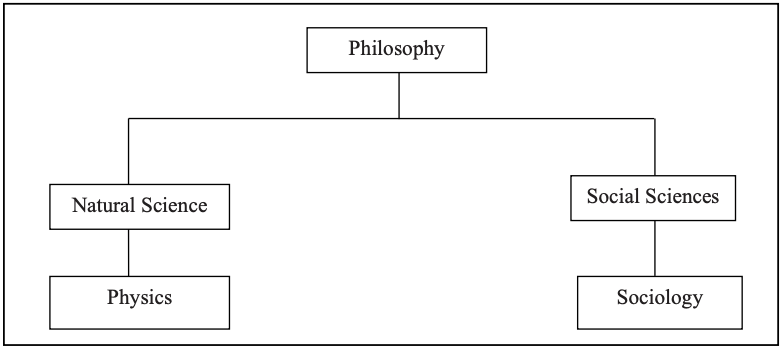
Durkheim in Montesquieu and Rousseau (1892) outlined the general conditions for establishing social science, applicable to sociology.
Science is not coextensive with human knowledge; not every question can be tested scientifically. Some belong to philosophy or art, not science.
Science must have a definite field or subject matter, focused on objective realities rather than human will or internal intentions.
Social science must study external bodies of data like laws, traditions, religion, as they appear in the world.
Science describes types or classes of subject matter, not individuals, to find general rules and behavioral regularities.
Social science classifies human societies and describes the normal form of social life for each society type; what is normal is considered healthy.
The subject matter of social science yields general principles or ‘laws’; without regularities, social science is impossible.
Durkheim believed in the continuity of natural and social worlds, influenced by Comte, meaning social phenomena are part of nature and interrelated.
Despite this continuity, the social world is distinctive and autonomous, comparable in status to biological or physical spheres.
Durkheim opposed reducing society entirely to human volition or will, which belongs to psychology, not social science.
Social science assumes societies have a nature and structure based on the arrangement of their elements.
To identify uniformities, types, and laws of society, a scientific method is necessary, using methods valid in natural sciences.
The criteria for social science set by Durkheim early in his career remained fundamental throughout his life and define sociology as a distinct field.
Sociology as Study of 'Social Facts'
Defining the subject matter of sociology involves two tasks: (a) defining the total field of study and (b) defining the type of ‘thing’ found in this field.
In The Rules of Sociological Method (1895), Durkheim focuses on the second task and identifies social facts as the subject matter of sociology.
Durkheim defines social facts as “ways of acting, thinking and feeling, external to the individual, and endowed with a power of coercion by reason of which they control him.”
For Durkheim, society is a reality sui generis, meaning it has a unique, independent existence distinct from individuals.
Society is formed by the association of individuals, creating a specific reality with its own characteristics, separate from physical or biological sciences.
This societal reality exists apart from and above individuals and must be the subject matter of sociology.
A scientific understanding of social phenomena must emerge from the collective or associational characteristics present in a society’s social structure.
Durkheim developed various sociological concepts to study society; one key concept is collective representations.
Understanding social facts is essential before learning about collective representations in Durkheim’s social thought.
Social Facts
Durkheim’s scientific vision of sociology is based on the objective reality of social facts.
A social fact is a way of acting, thinking, or feeling that is general in a given society.
Durkheim treated social facts as things that are real and exist independent of individual will or desire.
Social facts are external to individuals and have the power to exert constraint or coercion upon them.
Social facts are coercive in nature and exist in their own right, independent of individual manifestations.
The true nature of social facts lies in their collective or associational characteristics inherent in society.
Examples of social facts include legal codes, customs, moral rules, religious beliefs and practices, and language.
Types of Social Facts
Durkheim viewed social facts as existing along a continuum with different types.
At one extreme are structural or morphological social phenomena, forming the substratum of collective life.
These include the number and nature of elementary parts of society, their arrangement, and the degree of fusion between them.
Examples of structural social facts: population distribution, forms of dwellings, nature of communication systems.
Secondly, there are institutionalised social facts, which are general and widely spread in society, representing the collective nature of society as a whole.
Institutionalised social facts include legal and moral rules, religious dogma, established beliefs and practices.
Thirdly, there are non-institutionalised social facts which have not acquired crystallised forms and lie beyond institutionalised norms.
These are termed social currents, such as sporadic opinions, enthusiasm in crowds, transitory outbreaks, feelings of indignity or pity aroused by incidents.
All types of social facts together form a continuum constituting the social milieu of society.
Durkheim distinguished between normal and pathological social facts.
A social fact is normal if generally encountered in a society at a certain phase of its evolution.
Deviations from the normal are pathological social facts.
Example: some crime is normal in every society; an extraordinary increase in crime is pathological.
Other pathological facts include weakening moral condemnation of crime and economic crises leading to social anarchy.
Main Characteristics of Social Facts
Durkheim viewed sociology as an objective science that must follow the model of other sciences.
Sociology’s subject must be specific and distinct from other sciences' subjects.
The subject must be observable and explainable, similar to facts in natural sciences.
For Durkheim, the subject of sociology is social facts, which must be regarded as ‘things’.
Main characteristics of social facts are:
(i) Externality — social facts exist outside individual consciences, independent of individuals.
(ii) Constraint — social facts impose a coercive power on individuals, forcing themselves upon them.
(iii) Independence — social facts exist independently of individual wills or actions.
(iv) Generality — social facts have a general occurrence across society.Examples of externality: laws, customs, religious beliefs, and language exist prior to and outside individuals.
Social facts continue regardless of individual births or deaths, e.g., language persists independently of any individual.
Constraint is shown when institutions like law, education, and beliefs are obligatory and command individuals from outside.
A social fact is social because its basis is the group as a whole, not any particular individual.
Social facts are independent of individual characteristics or universal human nature.
Examples include collective beliefs, feelings, and practices of a group.
Social facts arise from the association of individuals, representing the collective content of society.
They differ fundamentally from phenomena in individual consciousness.
Social facts can be categorized and classified.
Social facts form the subject matter of sociology as a science.
Externality and Constraint
Social facts are external to the individual in two related senses.
First, every individual is born into an already organized society with existing values, norms, beliefs, and practices learned through socialisation.
These social phenomena exist prior to the individual and have an objective reality, making them external to the individual.
Second, social facts are external because any individual is just one element in the totality of relationships constituting society.
These relationships are not created by one individual but arise from multiple interactions between individuals.
Durkheim compares this to chemical elements combining to produce new phenomena that exist in the whole, not the parts.
Society, like a living cell composed of atoms, is greater than the sum of its individuals; the whole differs from its parts.
There is often a difference between individuals and the group, especially in collective demands or behavior.
Many rules of behavior reside exclusively in society itself, not in its members individually.
This shows social facts are distinct from individual or psychological facts, justifying the need for sociology as an autonomous discipline separate from psychology.
The second criterion defining social facts is the moral constraint they impose on individuals.
When individuals resist social facts, these facts assert themselves through mild ridicule, social isolation, or moral and legal sanctions.
Most individuals conform because they accept the legitimacy of social facts, not just fear sanctions (Giddens 1971:88).
Defining social facts in terms of constraint and coercion may shock proponents of absolute individualism.
Durkheim argues that most ideas and tendencies come from without, imposing themselves on individuals to become part of them.
Durkheim opposed the utilitarian view that society is held together by individuals pursuing self-interest.
He believed individual and society interests do not coincide, so society must exercise control or pressure to maintain social order.
To illustrate coercion, Durkheim notes education’s role in imposing ways of seeing, feeling, and acting that children cannot arrive at spontaneously.
The aim of education is the socialisation of the human being, with parents and teachers acting as representatives of the social milieu shaping the child.
Social facts are not defined merely by their universality; a thought repeated by all individuals is not necessarily a social fact.
What matters are the collective aspects of beliefs, tendencies, and practices that characterize truly social phenomena.
These social phenomena are transmitted through collective socialisation.
Social facts are recognizable because they are external to individuals and capable of exercising coercion over them.
Being external, social facts are general, and being collective, they can be imposed on individuals in society.
The Sociological Method
Rules for the Observation of Social Facts
Durkheim’s first rule: “consider social facts as things”; social facts are real and should be treated as concrete realities worthy of direct study.
Other writers often treat social facts as mere concepts or notions, not as empirical realities.
In all sciences, thought and reflection precede science, but science begins with the empirical method, not just conceptual discussion.
This is especially important in social science because social facts tend to be seen as either lacking substantive reality (mere creations of individual will) or as already wholly known through vague words like ‘democracy’ or ‘socialism’.
Such words often evoke confused ideas, vague impressions, prejudices, and emotions rather than clear facts (Durkheim 1950:22).
To avoid these issues, Durkheim insisted that social facts be treated as ‘things’, studied through the empirical method rather than direct intuition.
Social facts cannot be modified by a simple effort of will.
While studying social facts as ‘things’, three rules must be followed for objectivity:
i) Eradicate all preconceptions; sociologists must free themselves from commonplace ideas and maintain an emotionally neutral attitude towards their investigation.
ii) Precisely formulate concepts; sociologists often start with little knowledge and must conceptualize subjects based on observable external properties.Example: In Division of Labour, the type of solidarity in society can be inferred by the dominant type of law — repressive or restitutive, criminal or civil.
iii) Investigate social facts from an aspect independent of individual manifestations; objectivity depends on separating social facts from the individual facts expressing them.Social facts act as a common standard for society members.
Examples of social facts include legal rules, moral regulations, proverbs, social conventions, which sociologists must study to understand social life.
Social facts are seen in “currents of opinion”, which vary by time and place and influence group behaviors like marriages, suicides, birth rates.
Though these currents seem inseparable from individual cases, statistics help isolate them and represent them accurately via rates of births, marriages, suicides, etc. (Durkheim 1950:7).
Social currents are theoretical variables, and statistical rates are the means to empirically verify propositions about these variables.
Since social currents are not directly observable, Durkheim emphasizes introducing ‘devices of method’ for empirical verification.
The case of suicide rates is Durkheim’s best example of how social facts can be scientifically studied.
Rules for Distinguishing between the Normal and the Pathological
Durkheim distinguishes between ‘normal’ and ‘pathological’ social facts to advance the scientific study of human behavior.
Many writers have hindered this study by labeling behaviors different from their own as ‘pathological’.
A social fact is normal when understood within the context of the society in which it exists.
A social fact is normal if it is general to a given type of society and has utility for that societal type.
Example: Crime is commonly viewed as pathological or immoral because it violates shared values.
Durkheim argues crime is not abnormal because:
Crime exists in all societies, regardless of type.
Occasional deviance or norm violations allow for social change and provide opportunities for society to reaffirm or modify norms.
Crime can be useful to the evolution of morality and law.
Durkheim cites Socrates as an example: though legally a criminal in Athens for his independent thought, his “crime” contributed to a new morality and freedom of thought benefiting humanity.
Durkheim was influenced by medicine’s scientific study of both normal and pathological states of the body.
He applied this approach to social facts, studying normal features in the first parts of Division of Labour and abnormal features in the last part.
He considered crime and punishment as normal social facts.
A social fact becomes abnormal or pathological when its rate exceeds a more or less constant level for that social type.
For example, suicide is a normal social fact, though considered immoral by some because it opposes the value of life preservation.
The sudden rise in suicide rates in 19th-century western Europe concerned Durkheim and motivated his scientific study of the phenomenon.
Rules for the Classification of Social Types
Two opposing conceptions of collective life exist among scholars:
Historians argue each society is unique and cannot be compared.
Philosophers believe all societies belong to one human species with general attributes driving social evolution.
Durkheim takes an intermediary position, introducing the idea of social species or social types.
Despite diversity in social facts, societies can still be studied scientifically—they can be compared, classified, and explained.
Viewing all societies as one species overlooks important qualitative differences and makes it impossible to draw meaningful generalizations.
Classification of societies into types is essential for explaining social phenomena since problems and explanations differ by social type.
Determining whether a social fact is normal or abnormal depends on its relation to a specific social type.
Durkheim calls this classification ‘social morphology’.
A social type consists of common characteristics shared by several units in a group (e.g., bachelors vs. married persons).
Durkheim showed suicide rates are higher among the ‘bachelors’ type, but this should not be applied to individual cases.
Each society must be studied completely before comparing to identify similarities and differences and classify them accordingly.
Durkheim stated, “Is it not the rule in science to rise to the general only after having observed the particular and that too in its entirety?”
To determine if a fact is general for a species or social type, it is not necessary to observe all societies, a few well-chosen cases suffice.
According to Durkheim, “Even one well-made observation will be enough in many cases, just as one well-constructed experiment often suffices for the establishment of a law.”
Societies can be classified by their degree of organization, starting from:
Perfectly simple society or society of one segment (e.g., horde).
Simple polysegmental societies formed by combining hordes.
Polysegmental societies simply compounded formed by combining simple polysegmental societies.
More complex polysegmental societies doubly compounded formed by further unions.
Within these types, varieties exist based on whether there is complete fusion of initial segments or not.
John Rex critiques Durkheim’s biological approach to classifying societies:
Useful in description, classification, and creating average types.
Difficulties arise when studying historical processes where ‘species’ are constructed from history, making evolutionary theory less helpful.
Rules for the Explanation of Social Facts
Two approaches to explain social facts: causal and functional.
Causal approach explains why a social phenomenon exists.
Functional approach establishes the correspondence between the social fact and the general needs of the social organism (Durkheim 1950: 95).
Causes giving rise to a social fact must be identified separately from its functions.
Normally, causes are established before specifying functions since knowledge of causes can help infer possible functions.
Though cause and function are separate, they can have a reciprocal relation and study can begin with either.
Durkheim sometimes starts with functions before causes, e.g., in his study of division of labour.
Example: Punishment – crime offends collective sentiments; punishment’s function is to maintain these sentiments’ intensity, preserving social unity.
Functionalism in sociology (especially USA in 1940s-50s) owes much to Durkheim’s conception of function.
Durkheim emphasizes the method of explanation should fit the nature of social facts—since social facts are collective, explanation must have a social character.
Society is a separate reality from individuals and has its own characteristics.
A clear line exists between psychology and sociology; explaining social facts solely via individual psychology is false.
For causal explanation, the cause must be sought among preceding social facts, not individual consciousness.
For functional explanation, the function should relate to some social end.
Durkheim stresses the comparative nature of social science for establishing cause-effect relations.
To show causation, one must compare cases where both facts are present or absent and observe variations indicating dependence (Durkheim 1950: 125).
Sociologists usually lack laboratory control, so they use the indirect experiment or comparative method by studying spontaneous social facts.
Durkheim, following J.S. Mill’s System of Logic, praises the method of concomitant variations as the key tool in sociological research.
The method does not require excluding all other variables; the parallel occurrence of phenomena in enough cases suggests a possible relationship.
Validity arises because concomitant variations show causal relationships intrinsically, not by coincidence.
Constant concomitance is considered a law itself, regardless of other excluded factors.
When two phenomena vary directly, the relationship must be accepted even if sometimes one appears without the other due to:
Presence of a contrary cause preventing effect, or
The cause being present in a different form.
Example: A plant grows straight under direct sunlight, bends under indirect sunlight—demonstrates concomitant variation.
Concomitant variation should be reexamined but results from a methodical demonstration should not be abandoned hastily.
Concomitant variation can be applied at various levels: a single society, several societies of the same social type, or several distinct social species.
To fully explain a social institution of a given social species, one must compare its different forms not only within that type but across all preceding social species.
For example, explaining the present state of family, marriage, property requires studying their origins and composition in earlier societies, tracking their progressive development.
Complete explanation involves following the institution’s development through all social species to identify separate elements and conditions of formation.
The comparative method is the essential framework of social science for Durkheim.
Comparative sociology is not just a branch of sociology; it is sociology itself when it moves beyond description to account for social facts.
Emile Durkheim - Forms of Social Solidarity
Introduction
Economic and social solidarity is analysed by Durkheim in The Division of Labour in Society.
Durkheim aimed to understand the forces that regulate and control social life.
He established a dichotomy between segmental and complex societies to conceptualise his ideas.
Questions addressed include the characteristics of these societies and the types of solidarities found in them.
Durkheim identifies two types of solidarities: mechanical solidarity and organic solidarity.
These solidarities are linked to the types of law observed in different social structures.
Repressive law, which is painful to criminals, is associated with the segmental type of social structure.
The unit discusses the importance of the collective conscience in the social structure.
It defines collective conscience and examines its nature.
The restitutive aspects of law are linked to complex social structures, which make individuals interdependent and unite them in complex societies.
The content of collective conscience is explored with regard to changed social conditions in complex societies.
Mechanical Solidarity
Mechanical solidarity is sui generis, meaning it arises naturally based on resemblances of individuals.
It directly links individuals to society through common experiences shared by similar members.
Characterised by a segmental system, where every segment is homogenous and fully involved in the social structure.
Society is divided into small compartments that completely envelop the individual.
Originally based on clans found in less developed societies, but expanded later on territorial bases beyond consanguinity.
The segmental social structure has a low degree of interdependence; what happens in one segment rarely affects others.
It has a relatively low volume and density of moral and material interactions—limited people interact, and interactions happen infrequently.
People perform similar tasks independently, resulting in limited interdependence and low interaction density.
The question arises: what customs regulate people in mechanical solidarity? Durkheim answers this with the concept of collective conscience.
Homogeneity of experience leads to a shared collective conscience of common beliefs and practices.
Social life in such societies is blended with religion and economic institutions, resembling primitive communism with few differentiations.
Most property is common, experiences are similar, and rules and regulations relate to common life.
Customs and laws protect the group, its property, and its sentiments.
The nature of laws is collective, with wrong-doers punished by the entire collectivity.
Penal or repressive law is a key indicator of mechanical solidarity.
The strength of legal sanctions is directly proportional to the number of social bonds regulated by the collective conscience.
Punishment serves dual purposes: it is given to the individual wrong-doer and also strengthens the beliefs and values of society.
Any wrongdoing injures group sentiments, and punishment restores the authority of the collective.
If individuals in a society or sect are less dependent, more autonomous, and have less communication density and volume, it raises the question of how collective conscience or social control can develop across individuals or groups.
Concept of Collective Conscience
Collective conscience under mechanical solidarity is defined by Durkheim as a set of beliefs and customs common on average in a society.
These beliefs and customs form a determinate system with its own life-style.
Collective conscience exists in a general form throughout society.
It is possible to differentiate between the form of collective conscience and its content.
The form relates to the general characteristics of collective conscience.
The content refers to the specific beliefs and customs held within the society.
Collective Conscience: On the Basis of Forms
Durkheim states that the strength of social bonds in mechanical solidarity depends on three variables:
i) The relation between the volume of collective conscience and the individual’s conscience
ii) The average intensity of the stages of collective conscience
iii) The greater or lesser firmness of all those stagesThe more beliefs and sanctions present in society, the less freedom an individual has.
In societies with strong mechanical solidarity, there is a strong and extensive collective conscience.
This collective conscience creates harmonious relationships extensively among people’s activities.
It becomes difficult to distinguish between the individual’s conscience and the collective conscience.
Therefore, collective authority becomes the mode of totality, either involving the whole community or embodied by the chief of the community.
Collective Conscience: On the Basis of Contents
The content of collective conscience is rooted in the totality of society.
Society is controlled by common beliefs and sanctions unanimously accepted by its members.
In ancient times, religious elements permeated every aspect of society; the terms religious and social were synonymous in simple societies.
The source of superhuman features was deeply embedded in the constitution of the collective conscience.
The collective and social characteristics of conscience were seen as transcendental values.
These societal conditions elevated people beyond their individual conscience.
The stages of collective conscience were closely linked to traditional (local) conditions, connecting individuals to racial and powerful objects in the universe such as animals, trees, sun, moon, clouds, and other natural forces.
People have historically linked themselves to such natural and cosmic objects, which affect every conscience uniformly.
The fusion of individual conscience with the collective reflects its form and object.
Thus, collective conscience acquires specific features that vary across different simple societies.
Organic Solidarity
Division of labour is an essential condition of organic solidarity according to Durkheim.
Organic solidarity gradually replaces solidarity based on social likeness (mechanical solidarity).
In organic solidarity, the individual depends on different parts of society.
Society is viewed as an arrangement of different and specific functions mutually linked by social bonds.
Differences among individuals become visible as each person has a specific field of activity.
Individuals confine themselves to their own area of work or function.
The individual’s conscience is distinct from the collective conscience in organic solidarity.
New Forms of Collective Conscience in Organic Solidarity
Even simple societies can be well organised where organic solidarity is greater
In such societies, the social structure has features opposite to the segmental social structure
Organised social structure is characterised by a system of different organs, each with a specific role
These organs are formed by different components that are coordinated and subordinated around a single central organ
The central organ influences the rest of the organism within reasonable limits
Organised social structure leads to the fusion of segments completely
This fusion causes an individual’s sphere of interaction to extend
As this process continues, the social structure increases in numerical strength and its impact spreads beyond local boundaries
Fusion of segments results in the fusion of markets, creating a single market (city)
The society begins to resemble a large city, embracing the entire population within its boundary
Individuals are no longer grouped by lineage but by their specified activities
Social conditions and the nature of work bring individuals out of their birthplace to their place of work
Organised social structure is characterised by a high degree of interdependence
Industrialisation progress corresponds to the division of labour, which determines the concentration of social mass
Changes at one place are rapidly transmitted to other places
Hence, state/legal sanctions become necessary
Organised social structure has relatively high volume (material and moral density)
As societies advance, they become more voluminous, and work becomes more divided
Population becomes more concentrated with overall advancement
When social norms correspond to organic solidarity, the division of labour gives rise to legal rules
These legal rules determine the nature and relations of specialised functions
Any violation of these rules is dealt with through restitutive measures
Law with restitutive or cooperative sanctions acts as an index of organic solidarity
This index includes civil, commercial, procedural, administrative, and constitutional laws, derived from less-advanced societies’ penal rules
A correlation exists between penal law and mechanical solidarity, similar to the correlation between cooperative law and organic solidarity
The extent of cooperative law is proportional to the part of social life consisting of bonds engendered by division of labour
Interdependent relations regulated by customs based on similarity of work can be reasonably neglected here
Both legal and customary rules are essential for the existence of organic solidarity
For organic solidarity, different parts must cooperate in a determined way, at least under predetermined conditions
The contract is not self-sufficient but presupposes a set of extensive and complicated regulations matching the contracted aspects
On the Basis of Forms
The question arises about the form of collective conscience under organic solidarity
Considering the volume, intensity, and determinateness of collective conscience, Durkheim discusses its forms when volume remains constant or diminishes
Meanwhile, the intensity and determinateness decline
Advancement of society and progressive division of labour lead to a decline in the intensity and determinateness of collective states
The collective conscience has less strength to guide individuals in collective directions
As rules of conduct derived from collective conscience become more indeterminate,
The individual gains more chances for self-reflection
This increase in self-reflection provides greater opportunity for self-freedom
On the Basis of Contents
The content of collective conscience gradually becomes human-oriented, secular, and rational
These social conditions weaken the values of collective curiosity in society
The religious domain contracts significantly
The strong domain of collective religious beliefs and sentiments decreases with the rise of scientific procedures
The transcendental characters of society, once superior to human interests, begin losing their lustre
Durkheim views the features of collective conscience in the system of beliefs
In advanced societies, the supreme values bring both dignity to the individual and equality of opportunity
This concept is explained in Durkheim’s work Ethic and Social Justice.