Introduction
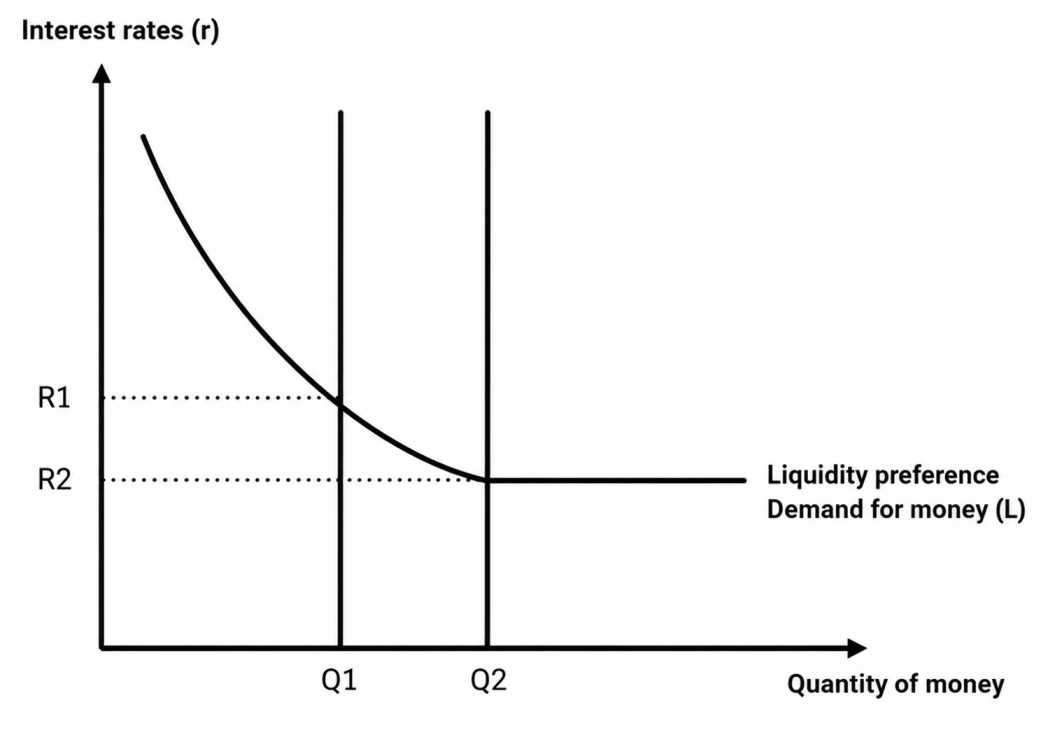
Demand for Money explains why people want a specific sum of money. According to Keynes, the demand for money, or liquidity preference refers to the desire to hold money. In general, the nominal demand for money increases with the level of the nominal output and decreases with the nominal interest rate. The amount of money that people want to keep depends on the value of the transactions that need to be managed.
The relationship between money supply and general prices, which is mainly dealt by the two approaches of the Quantity Theory of Money, viz., Fisher’s approach and Cambridge approach. Both the approaches suggest that an increase in money supply results in proportionate increase in the price level. In the end of this unit we will discuss the demand for money and money market equilibrium.
People hold money because it has purchasing power; its ability to buy goods and services. We notice that a person usually holds certain amount of money capable of buying certain goods and services. This amount varies across persons depending upon his income, preferences, interest rate, etc. Hence, the demand for money is the demand for real balances or (M/P).
When there is an increase in the general price level (P), nominal money balances (M) has to be increased in proportion to the rise in the price level ceteris paribus, to keep real balances constant.
About Demand for Money
- In economics, demand for money is commonly associated with cash or bank demand deposits. In general, the nominal demand for money increases with the level of the nominal output and decreases with the nominal interest rate.
- The demand for money is influenced by a variety of factors, including income level, interest rates, inflation, and future uncertainty.
- The late Lord Keynes, the famous English economist who gave birth to Keynesian Economics, proposed the modern concept of demand for money.
- Monetary policy can help to stabilise an economy when the demand for money is stable.
- When the demand for money is not stable, real and nominal interest rates change, and economic fluctuations occur.
- Money is required to manage transactions, and the value of the transactions determines how much money people wish to keep. The greater the number of transactions, the greater the amount of money demanded.
- Since the quantity of transactions is determined by earnings, it should be obvious that an increase in earnings leads to an increase in the demand for money.
- When people save their money rather than putting it in a bank where it earns interest, the money they save is also subject to the rate of interest.
- People become less focused on stockpiling money when interest rates rise because holding money leads to holding fewer interest-earning deposits.
- As a result, at high-interest rates, the amount of money demanded decreases.