
Sources of Earth’s Interior Information
There are various sources of information about the interior of the Earth which are classified into direct and indirect sources. To understand better, how the endogenic forces shape the landscape, it is important to learn about the interior of the earth. It’s not that the scientists had gone to the interior of the earth and observed the things carefully. Rather, the information is acquired based on estimates and inferences.
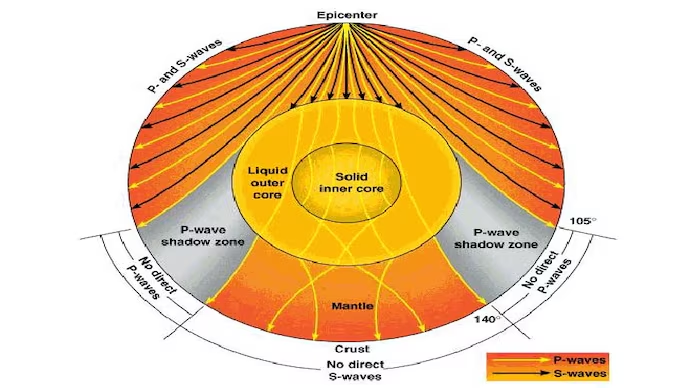
- Earth’s surface is very dynamic and human life is influenced largely by it.
- Along with exterior forces such as wind, water, etc. the forces present in the interior of the earth also shape its surface.
- The factual sources concerning the interior of the earth are not readily available.
- Therefore, the knowledge about the interior of the Earth is based on some direct and indirect sources.
Direct Sources
Rocks obtained from mining areas and materials obtained from volcanic eruptions are the direct sources of information about the interior of the earth. We have only been able to directly examine the earth’s interior up to a depth of a few kilometers through mining and drilling operations. The significant rise in temperature beneath the earth’s surface is largely responsible for limiting direct observations inside the planet but because of the direct source, we have found information about the earth’s interior.
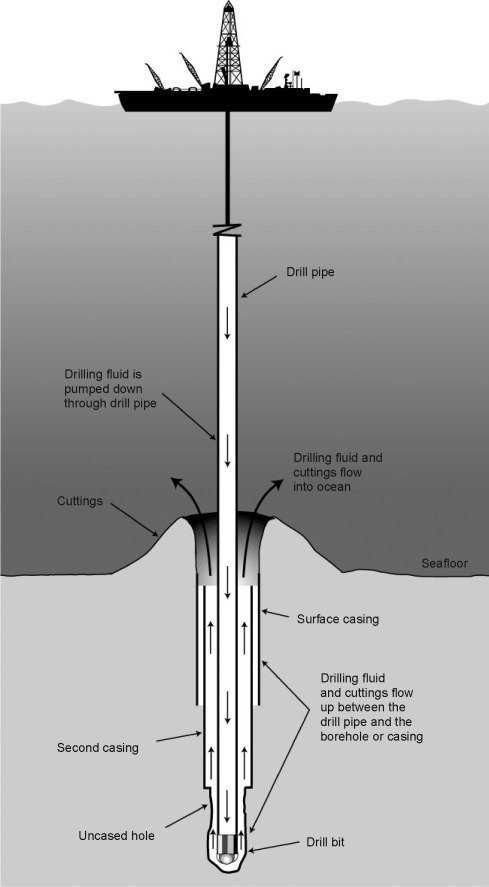
- Direct Sources are those that are accessible by direct observation. The direct sources of Earth’s interior include surface rock, volcanoes, mining projects, drilling projects, deep ocean drilling projects, and integrated ocean drilling projects.
- The nature of rocks beneath the surface is revealed by deep earth mining and drilling. However, mining and drilling are impractical beyond a certain depth, they provide little knowledge about the earth’s interior.
- In South Africa, the Mponeng gold mine (the world’s deepest mine) and the TauTona gold mine (the world’s second deepest mine) are the world’s deepest mines, both reaching a depth of only 3.9 kilometers.
- The deepest hole, about 12 kilometers deep, was drilled across the Kola Peninsula by the Soviet Union in the 1970s.
- Earth’s Surface: Surface rock is readily available at the surface of the Earth. By observing these rocks, we can know the form of material that can be found up to a certain depth.
- Volcanoes: Volcanic material that gets out after an eruption is readily available to us for observation. Since these materials come up from great depth, therefore, the quality of this material at great depth can be analyzed directly. However, the accurate depth of material can’t be ascertained.
- Material obtained from mining and drilling areas: From mining and drilling areas, many materials can be sourced for analysis. These materials reveal the nature of the material available at a certain depth.
- From mining, it is easy to deduce that pressure and temperature increase from the surface towards the interior deeper depth.
- Also, the density of the material increases from the top surface to the interior bottom.