
Statistical Inference
- Statistical inference is the process of using data analysis to infer properties of an underlying distribution of a population. It is a branch of statistics that deals with making inferences about a population based on data from a sample.
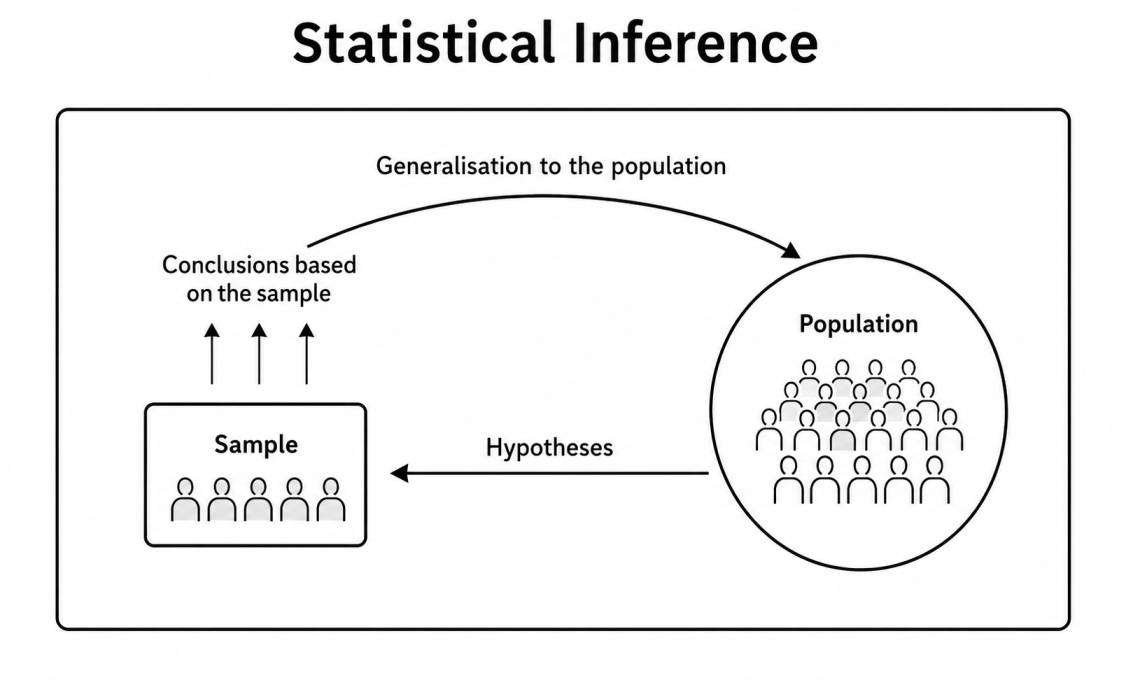
- Statistical inference is based on probability theory and probability distributions. It involves making assumptions about the population and the sample, and using statistical models to analyze the data.
- Statistical inference is the process of drawing conclusions or making predictions about a population based on data collected from a sample of that population. It involves using statistical methods to analyze sample data and make inferences or predictions about parameters or characteristics of the entire population from which the sample was drawn.
- Consider a scenario where you are presented with a bag which is too big to effectively count each bean by individual shape and colours. The bag is filled with differently shaped beans and different colors of the same. The task entails determining the proportion of red-coloured beans without spending much effort and time. This is how statistical inference works in this context.
- You simply pick a random small sample using a handful and then calculate the proportion of the red beans. In this case, you would have picked a small subset, your handful of beans to create an inference on a much larger population, that is the entire bag of beans.