
The Central Nervous System
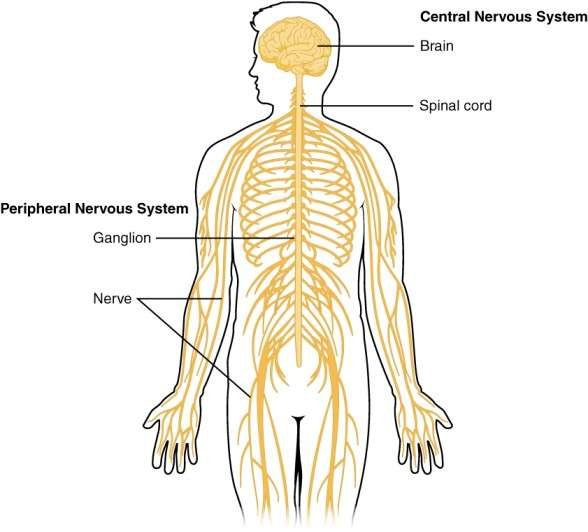
- The central nervous system (CNS) is the body’s command center. It includes the brain and spinal cord, which work together to control movement, sensation, thought, and emotion.
- By processing information from the senses, the CNS coordinates everything from voluntary actions like walking to automatic functions like breathing and heartbeat.
- Without the CNS, we wouldn’t be able to think, feel, or respond to the world. It connects our mental and physical experiences – making it essential not just for survival, but for how we experience life.
CNS Functions
- The Central Nervous System (CNS), composed of the brain and spinal cord, functions as the body’s primary control centre.
- It is responsible for receiving and interpreting sensory information, making decisions, and directing the body’s muscular and physiological responses.
- The CNS operates through a continuous cycle of receiving input, processing that data, and initiating output.
1. Core Physiological Functions:
The CNS is responsible for both high-level cognitive processes and the maintenance of internal stability (homeostasis).
- Reflex Coordination: The spinal cord facilitates rapid, involuntary responses to stimuli—such as the withdrawal reflex—bypassing the brain for immediate action.
- Sensory Processing: The system receives and interprets data gathered by the peripheral nervous system regarding the environment and the body’s internal state.
- Integration (The Processing Phase): The brain integrates current sensations with existing emotions and memories to form a complete picture of the environment.
- Cognition: Information reaching the brain is processed by the cerebral cortex to create consciousness, reasoning, and language. Uses integrated data to solve problems or use language.
- Motor Command: The brain initiates signals that travel through the spinal cord to trigger voluntary movements (e.g., speech) and regulate involuntary muscle actions.
- Homeostatic Regulation: The hypothalamus maintains internal equilibrium (body temperature, hunger, thirst) by working with the autonomic nervous system.
2. Component Roles:
The CNS is divided into two primary anatomical components with specialized roles:
The Brain:
- Acts as the primary site for higher-order functions including intelligence, personality, and emotion.
- Manages the interpretation of complex sensory data and the production of speech.
The Spinal Cord:
- Functions as the vital communication relay, carrying messages bidirectionally between the brain and the rest of the body.
- Serves as the independent center for coordinating spinal reflexes.
3. Protection and Metabolic Support:
Because the CNS is composed of delicate neural tissue, it requires extensive physical and physiological protection:
- Physical Armor: The brain is encased within the skull, and the spinal cord is protected by the vertebral column (vertebrae).
- Meninges: Three protective membranes (dura mater, arachnoid mater, and pia mater) surround the CNS to provide a barrier against injury.
- Nutrient Dependency: The CNS has a high metabolic rate and is heavily reliant on a constant supply of nutrients and oxygen to function.