
Subject resourcesQuick Links
Unit I. Emergence of Psychology↗Unit II. Research Methodology and Statistics↗Unit III. Psychological Testing↗Unit IV. Biological basis of Behavior↗Unit V. Attention, Perception, Learning, Memory and Forgetting↗Unit VI. Thinking, Intelligence and Creativity↗Unit VII. Personality, Motivation, Emotion, Stress and Coping↗Unit VIII. Social Psychology↗Unit IX. Human Development and Interventions↗Unit X. Emerging Areas↗
Unit I. Emergence of Psychology↗Unit II. Research Methodology and Statistics↗Unit III. Psychological Testing↗Unit IV. Biological basis of Behavior↗Unit V. Attention, Perception, Learning, Memory and Forgetting↗Unit VI. Thinking, Intelligence and Creativity↗Unit VII. Personality, Motivation, Emotion, Stress and Coping↗Unit VIII. Social Psychology↗Unit IX. Human Development and Interventions↗Unit X. Emerging Areas↗
Unit 1. Emergence of Psychology↗Unit 2. Research Methodology & Statistics↗Unit 3. Psychological Testing↗Unit 4. Biological Basis of Behaviour↗Unit 5. Attention, Perception, Learning, Memory & Forgetting↗Unit 6. Thinking, Intelligence and Creativity↗Unit 7. Personality, Motivation, Emotion, Stress and Coping↗Unit 8. Social Psychology↗Unit 9. Human Development & Interventions↗Unit 10. Emerging Areas↗
Neurons
(Detailed Notes)
Unit 4
UGC NET PSYCHOLOGY
Language
Choose your preferred language
Neurons
🎨 Reading Colors
Background
Text Color
Table of Contents
- Structure of Neurons
- Dendrites
- Soma (Cell Body)
- Axon
- Myelin Sheath
- Axon Terminals
- Glial Cells
- Types of Neurons
- Sensory Neurons
- Motor Neurons
- Relay Neurons
- Differences Between Neurons and Other Cells
- Function of a Neuron
- Synaptic Transmission
- Synapses
- Transmission of Nerve Impulses
- Neurotransmitters
- A neuron is a nerve cell that processes and transmits information through electrical and chemical signals in the nervous system.
- Neurons consist of a cell body, dendrites (which receive signals), and an axon (which sends signals).
- Synaptic connections allow communication between neurons, facilitating the relay of information throughout the body.
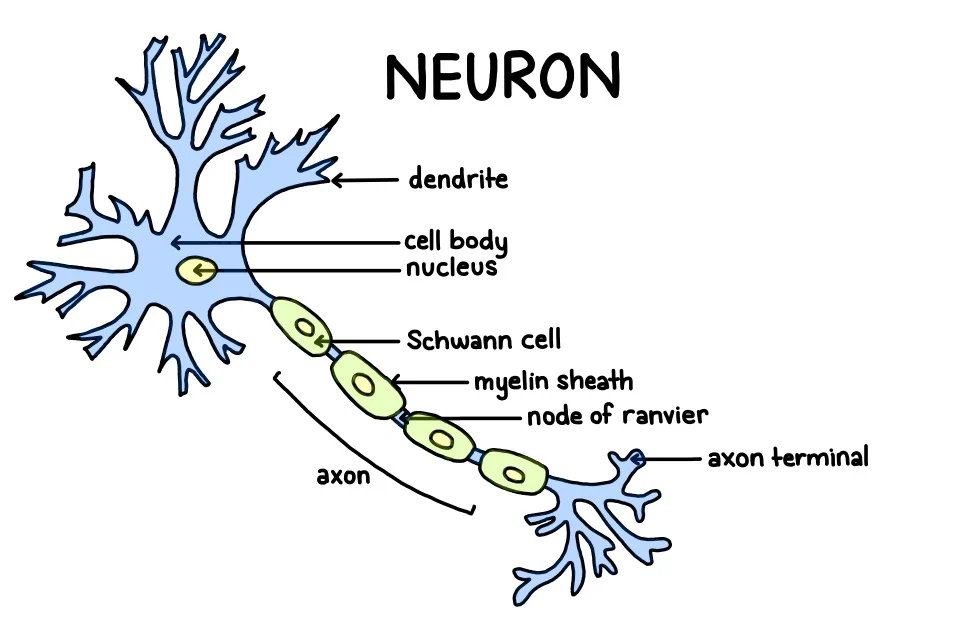
How do Neurons Work?
- Neurons lie adjacent to each other but are not connected.
- There is a tiny gap between neurons called a synapse.
- The function of a neuron is to transmit nerve impulses along the length of an individual neuron and across the synapse into the next neuron.
- The electrical signals transmitted by neurons are called action potentials.
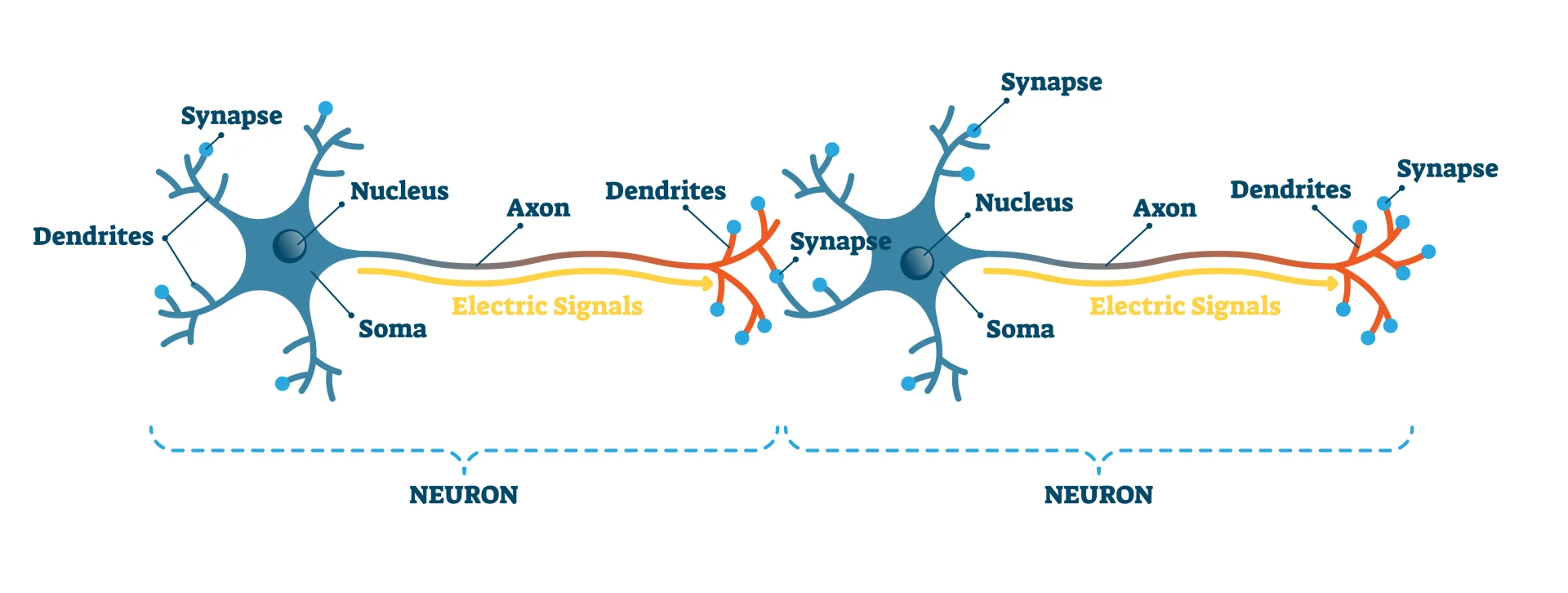
Synaptic Transmission:
- Synaptic transmission is the process by which one neuron communicates with another.
- The electrical signal needs to cross the synaptic gap to continue on its journey to or from the CNS.
- This is done using chemicals that diffuse across the gap between the two neurons. These chemicals are called neurotransmitters.
- During synaptic transmission, the action potential (an electrical impulse) triggers the synaptic vesicles of the pre-synaptic neuron to release neurotransmitters.
- These neurotransmitters diffuse across the synaptic gap and bind to specialized receptor sites on the post-synaptic neuron.
- This will then trigger an electrical impulse in the adjacent cell.
- The central nervous system, which comprises the brain and spinal cord, and the peripheral nervous system, which consists of sensory and motor nerve cells, all contain these information-processing neurons.
Structure of Neurons
- The neuron contains the soma (cell body), which extends the axon (a nerve fiber conducting electrical impulses away from the soma), and dendrites (tree-like structures that receive signals from other neurons).
- The myelin sheath is an insulating layer that forms around the axon and allows nerve impulses to transmit more rapidly along the axon.
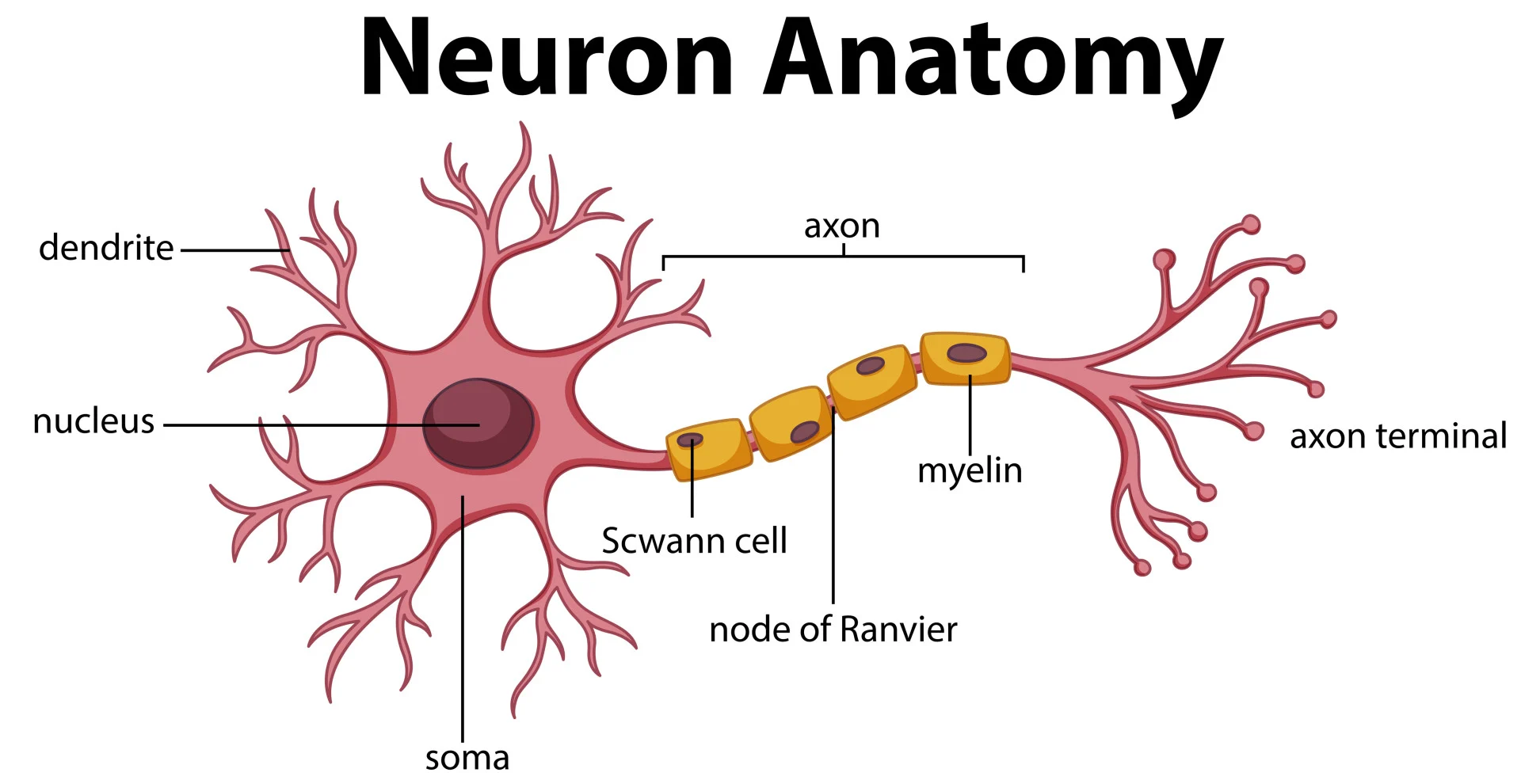
The unique structure of neurons permits it to receive and carry messages to other neurons and throughout the body.
Dendrites
- Dendrites are the tree-root-shaped part of the neuron which are usually shorter and more numerous than axons.
- Their purpose is to receive information from other neurons and to transmit electrical signals to the cell body.
- Dendrites are covered in synapses, which allow them to receive signals from other neurons. Some neurons have short dendrites, whilst others have longer ones.
- For instance, cells called Purkinje cells, which are found in the cerebellum, have highly developed dendrites to receive signals from thousands of other cells.