
The biosphere is the region where life exists along with the air and the land. It is the combination of all types of ecosystems on Earth which integrates all the biological communities and their interactions or relationships with the environment.
The living communities include animals, bacteria, plants, fungi, and human beings. It is derived from the Greek word “bios” and “sphaira” which means “Life” and “Earth’s shape” respectively. The term was coined by Eduard Suess, an English Austrian scientist, in his book titled “The Face of Earth” in which he discussed the relationships between living things and how the Earth supports them.
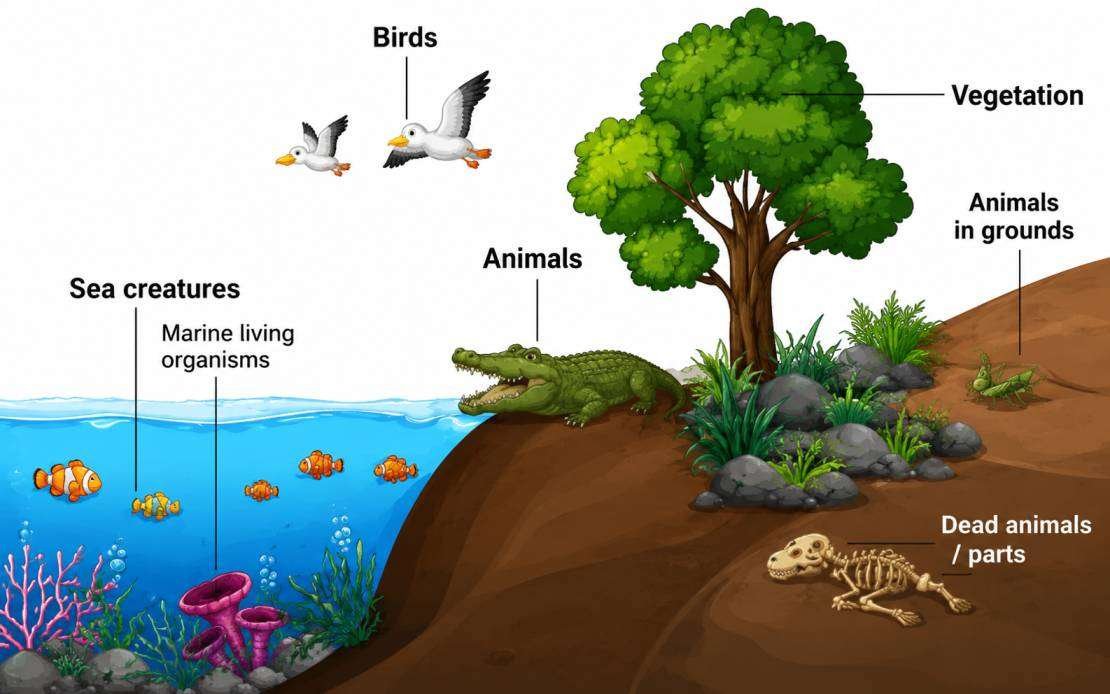
The biosphere encompasses everything from the deepest tree roots to the shadowy depths of the ocean, dense rainforests, and lofty mountaintops. It is also called the ecosphere. It can be found up to 12500 meters above sea level and at least 8000 meters deep in the ocean. Aside from natural biosphere, manmade ones have also been created, such as Biosphere 2, which is perhaps the biggest closed ecosystem ever made by humans.
Origin and Evolution of the Biosphere
The first prokaryotes flourished in an oxygen-free biosphere some 3.8 billion years ago. These primitive ancient prokaryotes included single-celled creatures such as bacteria and archaea. Some prokaryotes evolved a distinctive chemical process known as photosynthesis and converted water and carbon dioxide into simple sugars and oxygen with the help of sunlight. The organism’s ability to perform photosynthesis is autotrophy. More species, therefore, were able to use the carbon dioxide in the atmosphere and eventually supplied the atmosphere with oxygen. These creatures ranged from single-celled algae to multicellular autotrophs, such as vascular plants.
The atmosphere gradually changed into a mixture of oxygen and other gases that could support new types of life. More complex living forms were able to evolve as a result of the biosphere receiving more oxygen, such that they acquired different ecological niches. Numerous species of plants and other photosynthetic organisms, which formed the autotrophs of the food chain, increased. Likewise, animals that eat plants or other animals that behave as heterotrophs also developed. Also, to decompose dead plants and animals, bacteria and fungi (decomposers) evolved.
Components of Biosphere
The components of the biosphere are categorized as biotic, abiotic, and energy components. Abiotic components include non-living elements such as the lithosphere, atmosphere, and hydrosphere, while biotic components include plants, animals, and microorganisms.
Abiotic components of Biosphere
I. Lithosphere (Geosphere):
- It forms the terrestrial portion of the biosphere.
- It is the stiff, rocky outer layer of the Earth which is made up of the crust (the rocks that make up the continents and the ocean floor) and the upper mantle’s solid outer layer. These layers support life by giving shelter and sustenance from tiny bacteria to big mammals and lofty trees.
- It also stretches to a depth of almost 60 kilometers, and its lower mantle and core are the only parts that do not support life and are not a part of the biosphere.
II. Atmosphere:
- It is the region that contains different gases like oxygen, carbon dioxide, and other gases.
- This gaseous envelope makes it possible to see insects, birds, and other creatures soar high or fly above 2000 meters in the sky.
- With the increase in height, the concentration of oxygen level goes on decreasing, which limits the availability of organisms in the atmosphere. The region in the atmosphere up to which animals or other forms survive or sustain makes up the biosphere.
- Besides providing oxygen for respiration, the ozone layer of the atmosphere plays a crucial role in protecting living forms from the sun’s harmful ultraviolet rays.
III. Hydrosphere:
- It forms the aquatic portion of the biosphere as all the water components of the Earth, such as waterways, ponds, oceans, etc., are included in it.
- However, several solid forms, such as glaciers, are also included under the hydrosphere.
- It maintains the ecosystem by temperature regulation on Earth and supplying water to all living things.
- Every component of the hydrosphere is responsible for the existence of living forms.
Biotic Components of Biosphere
- Plants: These are autotrophic organisms that manufacture their food themselves through a process called photosynthesis. These are the primary producers, becoming the only primary source for all living organisms.
- Animals: These are heterotrophic organisms that depend on primary producers or other animals for their food, release energy and reserve it for future purposes. Thus, they are known as consumers.
- Microorganisms: They serve as decomposers that obtain their nutrition through the breakdown of waste or dead and decayed bodies. Fungi, bacteria, algae, viruses, etc., are under this category.
Energy Components of Biosphere:
It is the third and most important part of the biosphere, without which life on this planet would not have been conceivable. All biological forms on this planet depend on it for generation and reproduction. Every living thing functions like a machine that transforms one form of energy into another while also using it to do work. Sun is the ultimate source of energy for all living organisms in the biosphere for existence.
Biosphere Boundaries and Interactions between Components:
The boundaries of the biosphere are not fixed and can vary. The relationships between the atmosphere, lithosphere, hydrosphere, and living organisms are complex and interrelated.
For example, the atmosphere plays a crucial role by providing gases and regulating the climate necessary for supporting life. The lithosphere provides physical habitats and vital nutrients for organisms.
Similarly, the hydrosphere contributes water and aquatic ecosystems to the biosphere. These components involve nutrient cycling, energy flow, and gas exchange, affecting ecosystems’ distribution and functioning within the biosphere.
Factors Affecting Biosphere
- Earth tilting: Tilting of the earth causes seasons and seasonal fluctuations. Seasons are crucial to the continuation of life on Earth as it determines the type of species that will survive in an area.
- Distance between the Earth and the Sun: Lesser the distance from the Sun, the warmer the place, and the greater the distance between the Sun and the Earth, the cooler the place will be.
- Natural disasters: Catastrophes such as landslides, floods, volcanic eruptions, earthquakes, etc. ruin life and property, thereby creating an imbalance in the ecosystem.
- Some smaller factors: Several minor factors, such as changes in climate, humidity, temperature, precipitation, etc., carry the potential to alter the land and living conditions. These factors are responsible for the changes at the molecular level.
Biosphere Reserves
The future of the biosphere is dependent on the activities and interactions carried out by the population with its environment. With the increasing population and their notorious activities, such as haphazard utilization of available natural resources, pollution, forests fire, etc., the ecosystem balance gets disturbed.
Protected areas designed for the conservation of plants and animals recognized by UNESCO are known as biosphere reserves. They protect the local wildlife and its diversity. Terrestrial, marine and coastal ecosystems are all included in biosphere reserves. These reserves advocates strategies that balance biodiversity solution and sustainable human usage. It promotes sustainable development appropriate for integrating people and nature and where solutions are sought for biodiversity conservation, economic growth, research, and education. In Yangambi, the Democratic Republic of the Congo, the first biosphere was discovered. Other biosphere reserves are Fuerteventura Reserve in Spain, Gran Arenal Biosphere Reserve in Australia, and Bliesgau Biosphere Reserve in Germany.
Importance of Biosphere
- The biosphere of the Earth incorporates environmental factors such as suitable temperature, moisture content, nutrition and energy, and minerals that are crucial to sustaining the life of species.
- The biosphere is essential in producing organic material since the oxygen and nitrogen produced through oxygen synthesis are the molecules that produce organic matter.
- The plants of the biotic communities supply us with raw materials such as food, fuel, and fibers to survive.
- The decomposers of the biosphere play a lead role in the decomposition and biological modification of toxins and other harmful components.
- Naturally available compounds in the terrestrial biosphere help to provide pharmaceutical compounds in the pharmaceutical industries.
- The biosphere’s composition can be studied and managed to serve as an effective marker for regulating the amount of terrestrial pollution.
Examples of Biosphere
Biosphere 1 is the term used to describe the earth’s natural biosphere. The biosphere 2, artificial biospheres, however, were created by humans out of curiosity. An example of Biosphere 2 is located near Oracle, Arizona, with the initial objectives of studying various aspects and doing pertinent research.