
Introduction
Exogenic processes refer to external processes that occur on the Earth’s surface primarily due to the Sun’s energy, leading to weathering, erosion, and deposition. While endogenic processes emerge from internal Earth dynamics like tectonic movements, exogenic ones are driven by external atmospheric conditions. The two major climatic components that influence diverse exogenic processes are precipitation and temperature. Denudation, which literally means “to uncover,” is a term that encompasses all exogenic geomorphic processes.
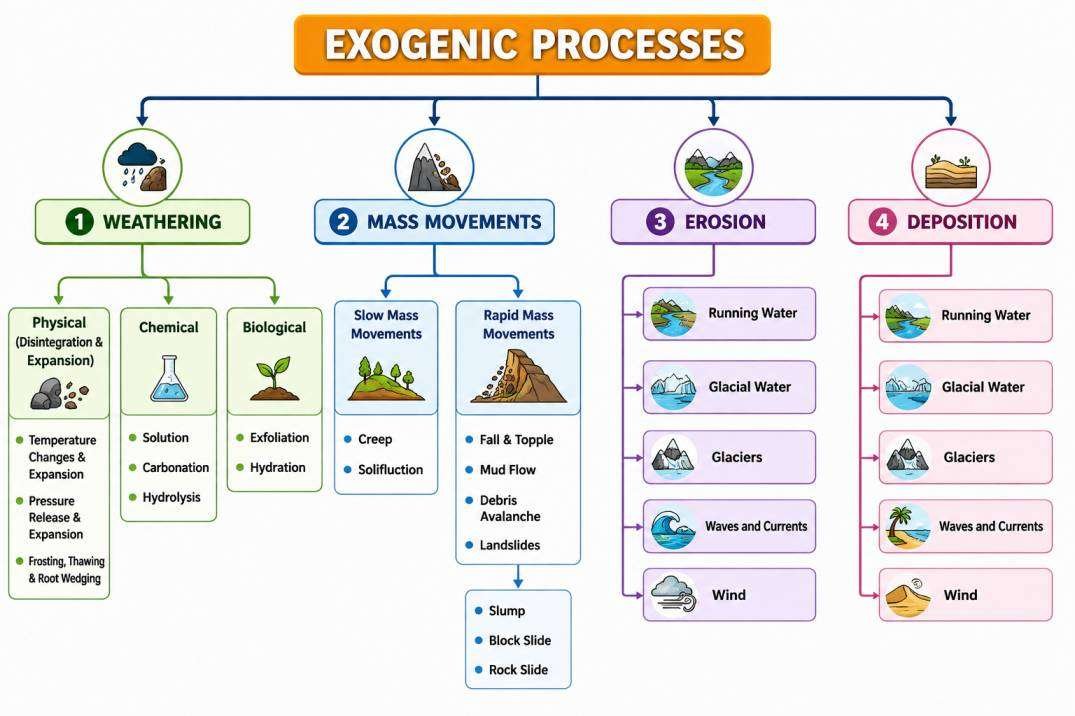
- The processes which occur on the earth’s surface due to the influence of exogenic forces are known as exogenic processes.
- It occurs at or near the earth’s surface that makes the surface wear away.
- Exogenic processes are destructive in nature and are responsible for the degradation and sculpting of the earth’s surface.
- Exogenic processes take their energy from the atmosphere, which is determined by the sun’s ultimate energy as well as gradients caused by tectonic causes.
- Because the earth’s surface has varied climatic zones, the exogenic geomorphic processes differ from one another.
- Temperature and precipitation are two essential climatic elements that influence a variety of processes.
- Denudation is a broad term that encompasses all exogenic geomorphic processes. The word ‘denude’ means to remove or reveal.
- Denudation includes weathering, mass wasting/movements, erosion, and transportation.
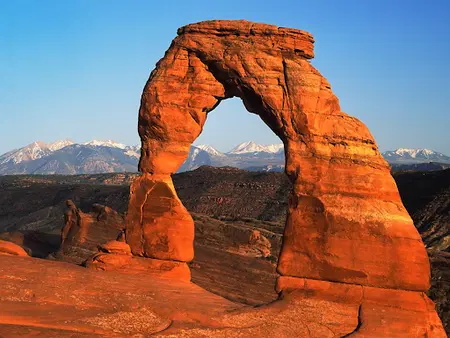
Types of Exogenic Processes:
Weathering
Weathering is the process of breaking down or dissolving rocks and minerals on the surface of the Earth. Water, ice, acids, salts, plants, animals, and changes in the temperature of the environment are all agents of weathering. Weathering and erosion constantly change the rocky features of Earth. There is a huge significance of weathering, ranging from soil formation to the creation of coastal landforms such as sea caves, sea arches, etc.
- Weathering refers to the breakdown and alteration of rocks and minerals at or near the Earth’s surface as a result of atmospheric, chemical, and physical agents.
- Weathering processes are responsible for producing soil from parent rock and altering the rock’s characteristics, preparing it for transportation through erosional processes.
- Weathering is the first stage in the denudation process, which includes weathering, erosion, transportation, and deposition.
- There are three main types of weathering:
- Physical (Mechanical) Weathering
- Chemical Weathering
- Biological Weathering
Factors Affecting Weathering Processes
Weathering types and rates vary at the regional and local spatial scales. Aside from climate, the type of rock (lithology) and the nature and extent of fractures or other flaws in it have a significant impact on the effectiveness of the various rock weathering processes.
Climate:
- Different weathering processes are associated with different climatic conditions
- Chemical weathering, for example, is especially effective and rapid in humid climates.
- In arid climates, chemical weathering is much more limited.
- Salt weathering processes are very effective in marine coastal locations due to the abundance of salts, high humidity, and contact with seawater.
Rock Type:
- The character of the bedrock, whether hard or soft, soluble or insoluble, broken or unbroken, has a significant impact on weathering.
- Weathering and erosion vary according to rock type; easily eroded rocks show more extensive weathering and erosion effects than resistant rocks.
- Some rocks, such as limestone, are more susceptible to chemical weathering, while harder rocks like granite are more resistant but can be broken down through physical processes.
Slope Variation:
- A slope’s geographic orientation—whether it faces north, southeast, or west—controls the slope’s exposure to sun, wind, and precipitation.
- Steeper slopes may enhance mechanical weathering due to rockfalls and landslides.
Vegetation:
- Although vegetative cover can protect rock by shielding it from raindrops and providing roots to stabilize soil
- It also produces organic acids from the partial decay of organic matter, which contributes to chemical weathering.
- Plant roots can enter crevices and break up a rock, exerting enough pressure to separate rock segments and expose more surface area to other weathering processes.
Physical Weathering
Physical weathering, also known as mechanical weathering, is the process by which rocks, minerals, and soils disintegrate without undergoing chemical change. Various mechanisms involved in physical weathering are block disintegration due to temperature changes, granular disintegration due to temperature changes, shattering due to rain showers and heat, block disintegration due to frost, and exfoliation due to temperature and wind.
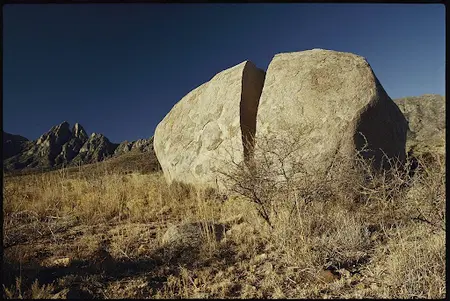
What is Physical Weathering?
- Physical weathering, also known as mechanical weathering, involves the breakdown of rocks and minerals into smaller pieces without any chemical change in their composition.
- This process is driven by physical forces, and the resulting fragments retain the properties of the original material.
- Physical weathering plays a significant role in landscape evolution, especially in arid regions where chemical weathering is less dominant.
- It also sets the stage for chemical weathering by increasing the surface area of rock fragments exposed to atmospheric conditions.
Various Mechanisms of Physical Weathering:
Block disintegration due to temperature changes:
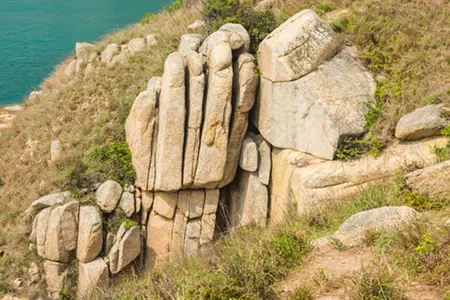
- Block disintegration, like granite, occurs in the well-jointed rock.
- It’s especially useful in locations with a wide diurnal temperature range of 10-15 degrees Celsius, as well as areas with barrel rocks that lack a protective vegetation cover.
- The joints in the rocks are separated into larger rectangular-shaped blocks in this method.
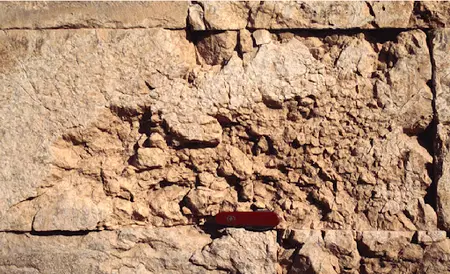
Granular disintegration due to temperature changes:
- Granular disintegration occurs in rocks made up of many coarse-grained minerals.
- Minerals with a darker shade absorb more heat than those with a light color.
- This causes grain-by-grain separation from the rock due to differential expansion and contraction of mineral grains.
Shattering due to rain showers and heat:
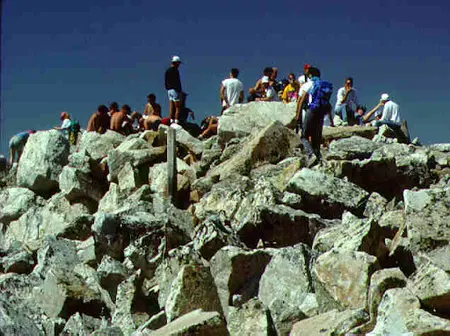
- Through the process of shattering, severe frost can disintegrate rocks along weak zones, resulting in very angular fragments with sharp corners and edges.
- At the foot of mountains or along slopes, shattering piles up rock particles known as screens.
Block disintegration due to frost:
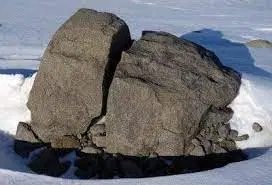
- When the temperature difference between day and night is significant, rocks expand and contract. As a result, rocks crack and these cracks allow water to enter.
- Water freezes in the fractures during the night, causing the rock to expand.
- The ice in the rock crevices melts during the day.
- The rock cracks after this process is performed multiple times. Rocks are split as a result of this.
Types of Physical Weathering:
Exfoliation:
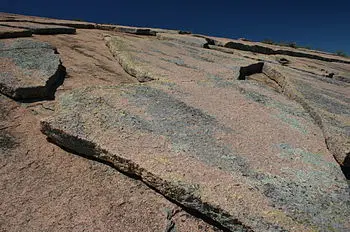
Exfoliation, also known as unloading, is the process by which the outer layers of rock separate from the rest of the rock.
Exfoliation due to pressure release or unloading:
- Due to the sheer underlying load, intrusive igneous rocks generated deep beneath the Earth’s surface are under great pressure.
- As the overlaying load is removed due to erosion, vertical pressure is released, causing the higher layers of the rock to expand and fracture parallel to the surface.
- Exfoliation is the phenomenon of sheets of rock breaking away from exposed rocks along cracks over time.
- Sheeting is the term for exfoliation caused by pressure release.
Exfoliation due to thermal stress weathering:
- Thermal stress weathering is induced by the subsequent expansion and contraction of rocks as a result of diurnal and seasonal temperature variations.
- The surface layers of rocks tend to expand more than the rock at depth, causing the surface layers to peel away (exfoliation).
- This method is most effective in dry areas and high elevations with large diurnal temperature fluctuations.
- Moisture can accelerate thermal expansion in rock, even if temperature changes are the primary driver.
Frost Weathering:
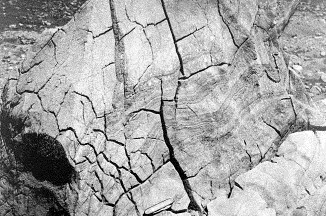
- Frost weathering is caused by the formation of ice within the pores and cracks of rocks as a result of repeated freezing and thawing cycles.
- Frost weathering refers to a collective name of various processes that occur when ice is present.
- Frost cracking, frost wedging, and freeze-thaw weathering are examples of these processes.
- Water penetrates the pore spaces or fractures in rocks during the warm season.
- Water freezes into ice throughout the winter, and its volume expands as a result.
- Even where the rocks are enormous, this exerts great pressure on them, causing them to crumble.
Frost Wedging:
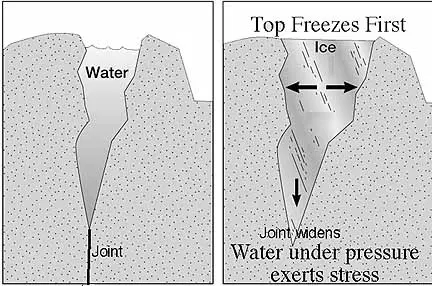
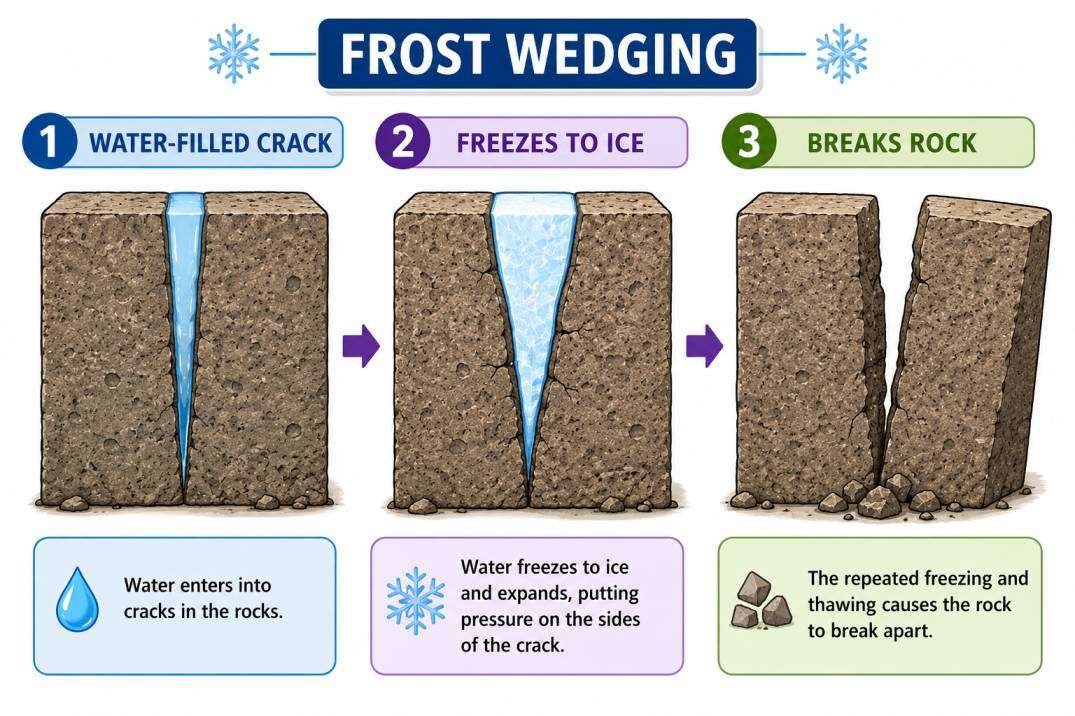
- The recurrent freeze-thaw cycle causes freeze wedging.
- With subsequent freezing and thawing, water-filled cracks are pressed further apart.
Block Separation (Freeze-Thaw Weathering):
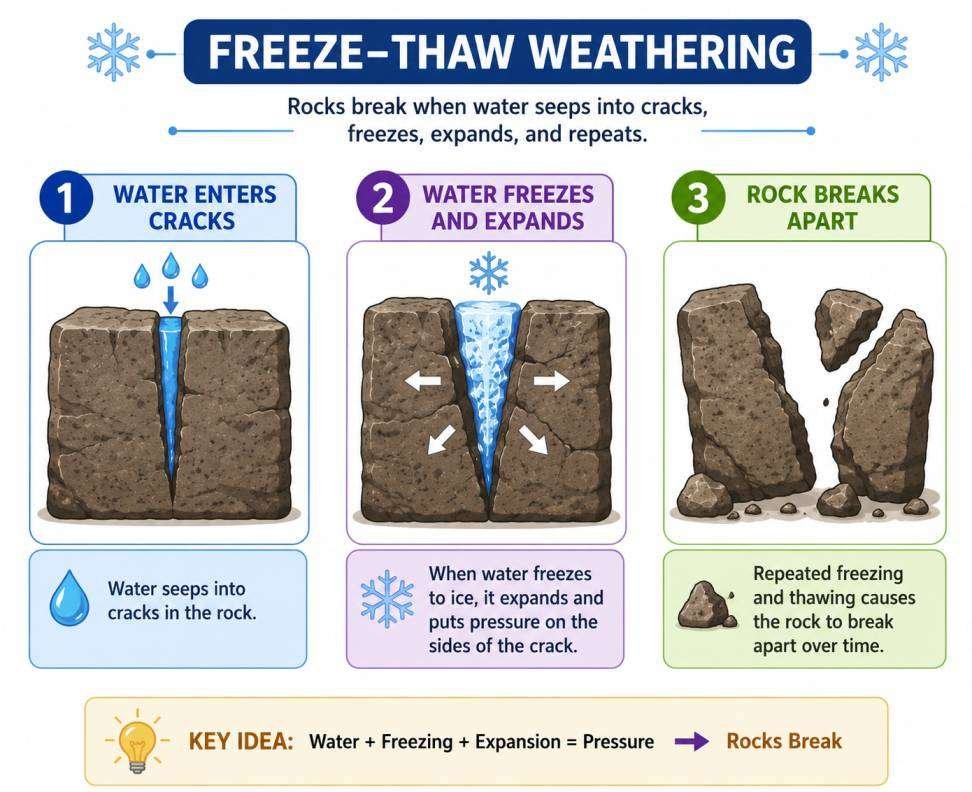
- Repeated freeze-thaw cycles weaken the rocks, which eventually break up in angular fragments along the joints.
- Block disintegration is the fracturing of rocks along joints into blocks.
Salt Weathering:
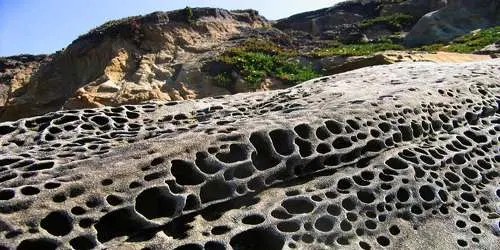
- When saline solutions seep into cracks and fractures in rocks and evaporate, leaving salt crystals behind, this is known as salt weathering.
- Salt crystals expand throughout the crystallization process and when exposed to temperatures above normal.
- Individual grains within rocks separate due to expansion in near-surface pores and finally fall off (granular disintegration or granular foliation).
- Salt weathering is most often linked with arid areas, where high temperatures promote rapid evaporation and crystallization.
Significance of Physical Weathering:
- It breaks down the initial rock into smaller pieces, thus preparing the rock material for soil formation. Therefore, the depth of the soil depends on the weathering of the rock.
- Biomes and biodiversity are essentially the results of forests (vegetation), which depend on the depth of the weathering mantle.
- Erosion is not significant if the rock is not weathered. That is, weathering helps reduce large amounts of waste, erosion, and undulations, and landscape changes are the result of erosion.
- Weathering of rocks and deposits helps to concentrate and enrich certain precious ores from iron, manganese, aluminum, copper, etc., which are very important to the national economy. Weathering is an important process of soil formation.
- When some rock pieces and particles are broken, they eventually turn into sediments, which form different types of sedimentary rocks such as sandstones and limestones.
- Typically, the broken rock pieces are deposited by rivers and compacted by great pressure, resulting in the formation of sedimentary rock.
- Weathering weakens rocks, making them easier to exploit, such as through mining and quarrying.
- Some weathered rocks, such as granite tors, are very interesting. As a result, they serve as a tourist attraction.
- Example – The Bismarck Rock in Mwanza, Tanzania, is one example. Some of these rocks appear to be so one-of-a-kind that locals are baffled as to how they came to be. They’ve converted them into local shrines where people can make offerings.
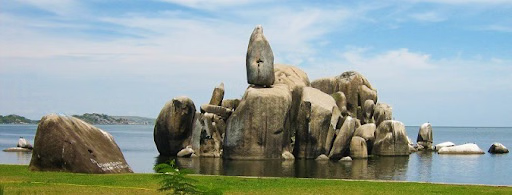
Bismarck Rock in Mwanza, Tanzania