Coral reef is an oceanic ecosystem that is made up of corals that construct reefs. Reefs are constructed by coral polyp colonies that are connected by calcium carbonate. Most coral reefs are composed of stony corals, whose polyps cluster. Coral belongs to the animal group Cnidaria’s class Anthozoa, which includes sea anemones and jellyfish. The majority of reefs thrive in warm, shallow, clear, bright, and turbulent water. In this article, we will look into the meaning, formation, types, and importance of Coral Reefs.
What are Coral Reefs?
Coral reefs are massive underwater structures formed over long periods through the accumulation of limestone secreted by tiny marine organisms called corals. Corals are living animals that exist in a symbiotic relationship with microscopic algae known as zooxanthellae. Each individual coral is called a polyp, and these polyps secrete calcium carbonate (lime), which gradually accumulates to form extensive coral reef structures.
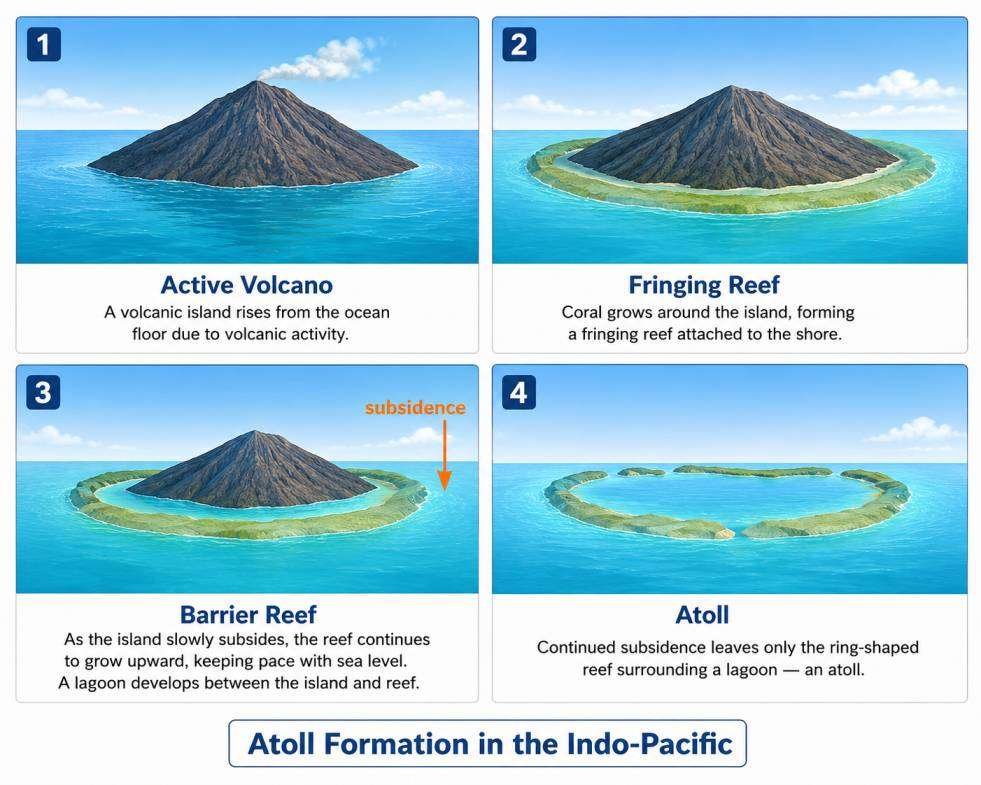
Coral reefs are broadly classified into three major types—fringing reefs, barrier reefs, and atolls. These types differ in their structure, formation, and distribution.
Beyond their beauty, coral reefs are among the most important marine ecosystems. They provide habitat and support for a vast variety of underwater life, protect coastlines from waves and erosion, and contribute significantly to the livelihoods of millions of people. They also serve as important sources of food, medicines, tourism, and income, making coral reefs vital to both marine ecosystems and human societies.
Formation of Coral Reefs
The majority of coral reefs were created following the Last Glacial Period when rising sea levels from melting ice flooded continental shelves. The majority of coral reefs are under 10,000 years old. The reefs expanded higher as settlements grew, keeping pace with the sea level rise. Reefs that climbed too slowly could drown if there wasn’t enough light. Coral reefs can also be found in the deep ocean, next to oceanic islands and atolls, distant from continental shelves. Most of these islands were formed by volcanic activity. Others stem from tectonic plate movements that raised the deep ocean floor.
Types of Coral Reefs
Based on their shape, nature, and manner of occurrence, coral reefs are divided into three groups: